
Imagine staring at a blank calendar. It is the first of the month.
You know you need traffic. You know you need leads.
But the cursor just blinks. It creates a sense of dread that every marketer and entrepreneur knows all too well.
The pressure to produce consistent, high-quality articles is overwhelming. We have noticed that most businesses fail at SEO not because they lack knowledge.
They fail because they lack consistency.
This is where the game changes completely.
You no longer have to rely on manual brainstorming or gut feelings to decide what to publish.
Enter robot speed content planning using AI. This isn't just about writing faster.
It is about planning smarter, predicting trends, and executing a strategy with a velocity that human teams simply cannot match on their own. It effectively takes the guesswork out of your content calendar.
See how Robot Speed content planning using AI helps you build a powerful strategy that works while you sleep.
In the fast-paced world of digital marketing, speed is a currency. Use it wisely, and you gain market share. Neglect it, and you fall behind competitors who are already leveraging automation.
We are going to walk you through exactly how this technology works.
We will explore how it generates clusters, predicts success, and automates the tedious parts of SEO. Whether you run a real estate firm, a health clinic, or a consulting agency, understanding this workflow is your key to scaling.
Let's dive into the mechanics of high-velocity content planning.

What Is Robot Speed Content Planning Using AI?
At its core, robot speed content planning using AI refers to leveraging artificial intelligence and automation to dramatically accelerate and optimize the processes of generating, scheduling, and managing content calendars. The old way involved spreadsheets, endless meetings, and manual keyword research that could take days.
The new way is different. It removes manual guesswork.
It increases operational efficiency. It enables strategic decision-making driven by data and predictive insights.
This system is highly relevant for entrepreneurs, marketing agencies, e-commerce, health, consulting, and real estate businesses.
Think about it this way. Traditional planning is like using a paper map.
You have to stop, check your route, and hope the road hasn't changed.
AI planning is like a real-time GPS with traffic updates. It adjusts instantly.
It identifies the fastest route to your destination, which in this case is higher search rankings and more revenue.
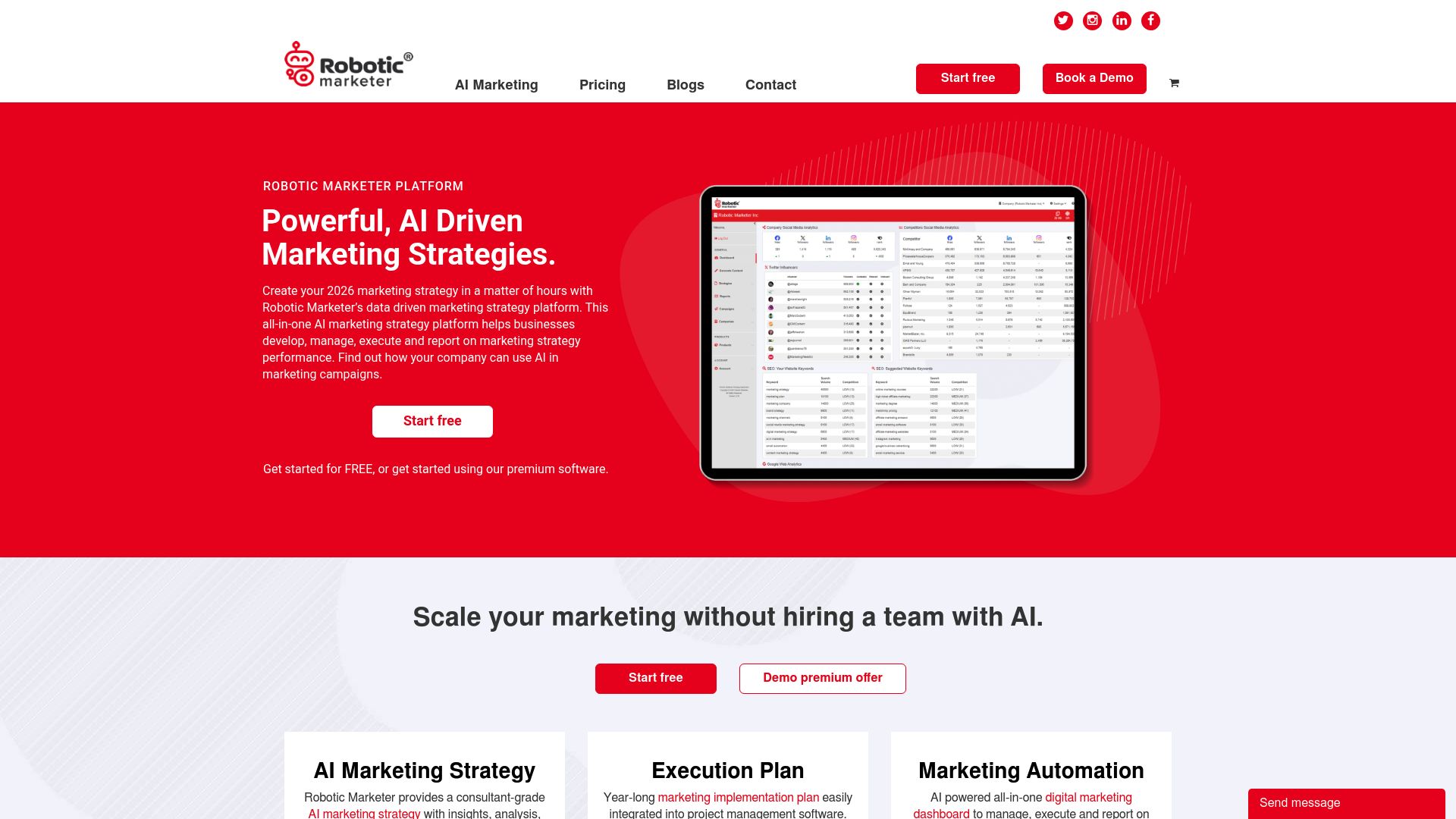
A recent analysis highlights how these tools analyze market data and social conversations to suggest content pillars tailored for a brand’s goals. You can read more about these capabilities at Robotic Marketer, which discusses how data drives these decisions.
The goal is simple. We want to move from ideation to publication in minutes, not weeks.
This methodology addresses the biggest bottleneck in marketing: volume combined with quality. You need both. Search engines crave fresh content.
Users crave relevant answers.
Robot speed content planning using AI delivers both by automating the architectural phase of your SEO strategy.
The Role of Speed in Modern SEO
Why do we focus on "robot speed"?
Because Google and other search engines operate in real-time.
If a trend breaks in your industry, waiting two weeks to publish a blog post means you missed the wave.
Speed allows you to capitalize on "freshness" signals.
When you can plan and execute a content cluster in 24 hours rather than a month, you establish authority faster. It is that simple.
This speed also applies to correcting course.
If a strategy isn't working, AI tools analyze the performance data immediately.
You can pivot your content plan for the remaining days of the month instantly.
Humans hesitate. Robots do not. They follow the data.
This agility is what separates market leaders from the rest of the pack.
How Automated Ideation and Calendaring Works
The magic starts with data ingestion.
You cannot plan a trip if you do not know the terrain.
Similarly, robot speed content planning using AI starts by consuming vast amounts of information. AI tools analyze market data, competitors, social conversations, and prior content performance to suggest content pillars and themes tailored for a brand’s goals and target audience.
Here is how the workflow typically looks:
- Competitor Audit: The AI scans your top five competitors. It looks at what they are ranking for and, more importantly, what they are missing.
- Gap Analysis: The system identifies "content gaps." These are the juicy topics your audience is desperate to find, but your competitors have completely overlooked.
- Trend Spotting: The AI keeps an eye on social media chatter and search trends, letting you know which topics are just about to blow up.
Think about having content ideas mapped out for weeks, or even months, in advance. These systems don't just give you ideas; they pack your calendar with the best topics, tell you when to post, and even suggest formats. The result?
You're always consistent, and that dreaded writer's block becomes a thing of the past. You can see how this depth of planning works in studies by Optimizely, which detail the shift from manual to automated logic.
Creating Content Clusters with AI
One of the most powerful application of this technology is creating content clusters with AI. A content cluster (or topic cluster) is a group of interlinked pages built around one pillar topic.
This is the gold standard for SEO today.
In the past, mapping out a cluster was tedious. You had to draw diagrams to ensure your "Pillar Page" linked to your "Cluster Pages" and vice versa. Now, AI does this instantly.
When you input a main keyword, the AI suggests 10 to 20 sub-topics that are semantically related.
For example, if you are a real estate agent, your pillar might be "Buying a Home in Miami." The AI immediately generates the cluster:
- Miami school districts guide
- Closing costs in Florida
- Best neighborhoods for retirees in Miami
- Mortgage rates forecast for Miami
It does not just list them. It schedules them in a logical order to build topical authority. By publishing these in a tight sequence (robot speed), you signal to Google that you are the ultimate expert on this topic.
This boosts your rankings significantly faster than sporadic posting.
Rapid Content Generation and Optimization
Once the plan is set, execution follows immediately.
AI-powered platforms draft multiple content variations for blogs, emails, social, and web. This often reduces the time to create an article or campaign by over 60%. It is not about replacing human creativity.
It is about augmenting it.
What's amazing is that generative AI can whip up first drafts, punchy social media posts, attention-grabbing headlines, images, and sometimes even video clips. This makes it super easy to A/B test your ideas and tweak your message on the fly for whatever platform or audience you're targeting.
Just imagine creating four different takes on the same article and seeing which one actually connects with your readers.
Honestly, this is a lifesaver for any SEO content strategy built on AI. You can finally target your keywords without your writing sounding like a robot wrote it.
The AI analyzes the top 10 results for your target keyword. It looks at the semantic terms they use.
Then, it ensures your content plan includes these terms naturally.
At RobotSpeed, we take this a step further. We do not just generate the text.
We automate the publication and the backlinking process. Writing is only half the battle.
If nobody links to your content, it stays invisible. Integrating backlink automation into the planning phase is a game-changer.
You are not just planning what to write; you are planning how it will rank.
Strategic Data-Driven Recommendations
Gut feeling is great for art. It is terrible for SEO.
Advanced platforms deliver recommendations by continuously ingesting live campaign, CRM, and web analytics data. This creates a feedback loop that gets smarter every single day.
Imagine you run an e-commerce store. You planned a series of posts about "Summer Fashion." But then, the data flags a sudden surge in searches for "eco-friendly fabrics." A human planner, buried in their spreadsheet, would likely miss that completely. But AI-powered planning catches it instantly.
The system's algorithms are constantly chewing on performance data, figuring out what's working and suggesting changes in real time.
It might tell you to push a topic that's gaining traction or move a post to a better time slot to get more eyes on it.
Being able to pivot like this is crucial. It stops you from pouring time and money into content that your audience has already moved on from.
Instead of sticking to a rigid plan made three months ago, your strategy evolves with the market.

Sector-Specific Applications: Who Needs This?
So, you're probably asking yourself, 'But will this really work for *my* industry?' And the answer is a resounding yes.
Let's look at how different industries utilize robot speed content planning using AI to gain a competitive edge.
Health and Medical Sector
In healthcare, trust is non-negotiable.
If you're in the health sector, you absolutely have to produce content that's not just accurate, but also comes across as authoritative.
But let's be real, doctors are busy saving lives, not fussing over their blog.
That's where AI planning steps in, identifying the most common questions patients in your area are Googling. It can then automatically schedule out weekly health tips, post updates on vaccines, or publish easy-to-understand explanations of new treatments. By segmenting the audience, it makes sure your expert content gets to the right people—whether they're patients, clients, or just the local community.
This builds trust without taking doctors away from patients.
Real Estate Agents
Real estate is hyper-local. An agent needs to dominate the search results for their specific town or zip code. AI creates automated generation of local market insights, listing updates, and agent profiles.
It creates integrated multi-platform campaigns. Imagine automatically generating a blog post every time housing inventory data is released, analyzing what it means for buyers and sellers in your specific area. That is the power of automation.
E-commerce Businesses
For online stores, seasonality is key. You cannot start planning for Black Friday in November.
AI planning tools analyze historical data to map out promotional sequences months in advance. They ensure personalized product promotion sequences and always-fresh campaign material.
The system updates in real time based on seasonal shifts and user behavior. For example, if the weather forecast shows a week of rain, the AI might ping you to immediately push your content about rain gear.
Consulting Firms
As a consultant, you're not selling a product; you're selling expertise. Your content has to reflect that deep well of knowledge.
This is where an SEO content strategies powered by AI becomes a secret weapon, helping consultants slice up those dense white papers into an easy-to-read blog series, sharp LinkedIn posts, and engaging newsletters. This keeps you top-of-mind for potential corporate clients because it targets those specific, long-tail B2B keywords your competitors haven't even thought of.
Why "Robot Speed" Beats Manual Processes
Let's be honest about the limitations of the human brain.
We get tired.
We get distracted.
We have bad days. An AI content planner does not have these issues.
It operates at maximum efficiency 24/7.
Here is a breakdown of the key benefits:
| Feature | Manual Planning | Robot Speed AI Planning |
|---|---|---|
| Time Commitment | 20+ Hours/Month | 1-2 Hours/Month |
| Data Analysis | Limited inputs | Infinite data points |
| Adaptability | Slow reaction time | Instant dynamic changes |
| Scalability | Linear (hire more people) | Exponential (add more compute) |
This efficiency cuts planning and production time by over half.
It minimizes manual errors and creative fatigue. Most importantly, it guarantees consistency. Consistency is the number one factor in SEO success.
Google wants to see that your site is alive and active.

Audience Segmentation and Personalization
One size fits nobody.
That is the reality of modern marketing.
If you treat all your visitors the same, you will convert none of them. AI systems analyze website and social data to identify distinct audience segments by their behaviors and content preferences.
The platform will even suggest different tones for each group. For potential buyers, you might want a tone that's a bit more urgent and persuasive.
When you're talking to investors, it'll lean towards analytical and data-rich, while for casual visitors, it'll suggest something more fun and educational. Robot speed content planning using AI maps these personas to your calendar automatically.
You can ensure that every Tuesday you speak to your "Prospective Buyer" segment, while every Thursday covers your "Industry Peer" segment. This level of granularity is impossible to manage manually without a massive team.
Best Practices for Implementing AI Planning
Adopting robot speed content planning using AI is a journey. You do not want to just switch it on and walk away.
You need a strategy. Here is the best way to approach it.
1. Define Your Strategic Goals
Before buying tools, define success.
Are you looking for traffic?
Leads?
Brand awareness?
clearly define your strategic goals and select AI tools that integrate with your marketing stack. If you use WordPress, get a tool that talks to WordPress. If you need backlinks, choose a solution like ours that integrates backlink credits.
2. Human Oversight is Mandatory
AI is the engine, but you are the driver. Use AI recommendations as a starting point.
Refine the output based on your expertise and brand voice.
An AI might suggest a topic that is technically high-volume but practically irrelevant to your high-end brand positioning. You need to be the filter.
3. Continuous Learning
The system learns from you, and you must learn from it. Continuously review analytics.
Allow the AI system to learn and adapt with your business. If the AI suggests a topic that bombs, mark it.
The system will learn not to suggest similar angles in the future.
You can find more on the importance of this feedback loop in articles from CoSchedule. They emphasize that the tools are only as good as the strategy behind them.
The RobotSpeed Advantage: Integrated Backlinks
We have talked a lot about content planning. But content without authority is like a car without fuel.
It looks nice, but it goes nowhere. This is why Robot Speed (the service) is unique in the market.
Most AI tools stop at content generation. They say, "Here is your article, good luck." We believe that is not enough. To rank, you need backlinks.
Our platform provides one-click SEO content and backlink automation.
With 30 articles per month and 100 backlink credits daily, we help businesses increase their SEO results tangibly. We integrate the "off-page" SEO strategy directly into the content planning.
When we generate an article for you, we are already thinking about how to power it up with links. That is true holistic planning.
Our service is comprehensive. We handle the strategy, the writing, and the authority building. This allows you to focus on running your business while we handle the digital heavy lifting.

Caveats and Next Steps
It is important to be realistic. AI content tools accelerate and optimize, but they require human oversight for brand voice, compliance, and originality. Just remember to never hit 'publish' on raw AI content without giving it a quick once-over, especially if you're in a regulated field like finance or healthcare.
Also, adoption speed matters. The longer you wait to integrate robot speed content planning using AI, the further ahead your competitors get. They are already building their clusters.
They are already capturing your keywords.
Actionable Advice for Entrepreneurs
If you are ready to start, here is your checklist for this week:
- Audit your current content process. How many hours are you wasting?
- Identify your top 3 competitors and see how frequently they post.
- Try a tool that automates the calendar (like ours).
- Set a goal to double your content output next month using AI assistance.
The future belongs to the fast.
It belongs to those who can synthesize data into action instantly. It belongs to those who use robots to handle the drudgery so humans can handle the strategy.
Summary
So, let's wrap this up. The bottom line is that robot speed content planning using AI is a total game-changer for how you plan, create, and manage your content everywhere it lives.
It takes all those repetitive marketing chores off your plate and proactively builds out your schedule. It provides strategies backed by data, not guesswork.
By learning from real data to continuously strengthen your content ROI, it puts you ahead of competitors who still rely on slow manual methods. Whether you are creating content clusters with AI or building complex SEO campaigns, technology is the lever that moves the world.
Are you ready to stop guessing and start growing?
Do not let another month go by with a sparse calendar. Check out our services at RobotSpeed today.
Get your 30 articles. Get your daily backlinks. Watch your rankings climb.
Frequently Asked Questions (FAQ)
How does AI content planning differ from standard content calendars?
Standard calendars are static and manual. You fill them out based on what you think is good. AI content planning is dynamic and data-driven.
It fills the calendar based on what data proves is working, covering gaps your competitors are missing.
Can AI really plan my entire content strategy?
It can definitely build the foundation for you. Think of it as your strategic partner that identifies the main content pillars, pinpoints the keywords, and maps out a schedule. That said, you're still the driver.
You'll always want to check that the AI's plan lines up with your business goals and give it a final review to make sure it sounds like *you*.
Is Robot Speed content planning suitable for small businesses?
Absolutely!
To be honest, small businesses often see the biggest benefits. Think about it: huge corporations have entire teams dedicated to this stuff.
As a small business owner, using AI for content planning lets you go toe-to-toe with them, putting out the kind of high-quality content that used to require a massive team.
Does this system help with backlinks?
Here's a key difference you need to know: most AI planning tools on the market don't touch backlinks.
But RobotSpeed is different. We built our platform to combine content generation *with* backlink automation. You get a complete SEO solution in one click, so all that perfectly planned content actually has the power to rank.