
In a world that's just flooded with digital noise, a single great image can speak volumes. Often, it's the silent handshake between your brand and a potential customer.
This isn't a photography guide for artists; it's designed for you, the savvy business leaders, entrepreneurs, marketing agencies, and professionals in e-commerce, real estate, and healthcare. We’re going to blow past the simple idea of just having “nice pictures” on your site.
We'll show you how strategic, custom commercial photography becomes a core piece of your brand, a tool for building incredible trust, and a real engine for growth. It’s about building a visual language that shows your value before a single word gets read.
You're already aware that visuals matter. What this guide really unpacks is the *why* and the *how*, showing you how to create images that do more than just sit there looking pretty. Real professional photography tells a story, captures your company’s unique vibe, and forges an emotional connection that can make all the difference in a buying decision.
The gap between a business that really thrives and one that's just getting by often comes down to its power to project credibility and authority.
Studies from sources like M&R Group show that high-quality, custom imagery tells clients you’re a serious, reliable, and valuable partner, pushing them to choose you over competitors hiding behind the same old generic stock photos.
This guide will take you through the essential types of business photography, the best practices that separate the pros from the amateurs, and how you can strategically use these visual assets across all your marketing for the biggest payoff.

We'll look at everything from product shots that convert to team photos that build personal connections. We’ll also cover developing a portfolio that works as a sales machine and the critical link between your images and your SEO performance.
Think of this as your complete blueprint for turning your visuals from a simple background element into something that actively drives engagement and revenue. It’s time to stop treating photography like an expense and start seeing it as one of the smartest investments your business can make.
The insights here give you actionable steps for any industry, whether you're a consulting firm trying to show off your expertise or an e-commerce brand that wants to make products fly off the virtual shelves.
Why Your Business Needs More Than Just Pictures
In today's market, custom photography isn't optional, it’s a non-negotiable asset that fundamentally shapes how people see your business.
It’s really about building a fortress of professionalism and trust around your brand.
The moment potential clients land on your site or social media, they’re making snap judgments based on what they see. When you have high-quality, original images of your team, your products, and your work in progress, it signals that you're truly invested in your business and confident in what you offer.
Right away, this sets you apart from the competition that's still using the same tired, impersonal stock photos we've all seen a million times.
But it's more than just professionalism; photography is one of the most powerful storytelling tools you've got.
It’s not just about showing what you do; it’s about getting across the how and the why. A picture of your team working together on a project doesn't just prove you have employees, it tells a story of teamwork, fresh ideas, and dedication. Seeing an image of your product in a real-life situation helps customers imagine how it could benefit their own lives.
This kind of visual story creates a connection, both emotional and intellectual, that's way more convincing than any block of text could ever be.
That connection directly builds client trust and sways purchasing decisions.
It makes your brand stick in their minds and feel more relatable. I mean, think about it: a real estate agency with stunning, real photos of their agents and the neighborhoods they love feels so much more trustworthy than one using generic house pictures.
In the same way, a consulting firm that shows its actual experts in action with clients gives off a vibe of authority and experience that stock photos just can't touch. Your photos are your proof.
The Essential Types of Business Photography
To build a solid visual brand, you're going to need a mix of different types of images. This guide breaks down the key types every business should have in its back pocket, with each one serving a specific, strategic purpose.
-
Product Photography: For any e-commerce, real estate, or even healthcare business, this is your lifeblood. It’s not enough to simply show an item; you have to present it in a way that’s both accurate and appealing.
Make sure you use multiple angles, show the product being used, and go with clean, simple backgrounds to let the item be the star. For something like a health product, you might want a crisp shot of the packaging right next to a lifestyle photo of someone clearly benefiting from it.
-
Team and Culture Photos: Let's face it, people do business with people, not logos. Showing off your team’s professionalism and your company's vibe is a game-changer for service businesses like consulting firms and marketing agencies.
These kinds of pictures forge personal connections, put a face to the name, and really highlight the human side that makes your company stand out. Try to skip the stiff, formal headshots and opt for more dynamic, real-life shots of your team working and interacting together.
-
Action Shots and Location Imagery: Show your business actually doing its thing.
Seeing genuine visuals of your team making a product, running a client meeting, or just the look of your office space makes a huge difference in how your brand is perceived. If you're in real estate, this means getting those wide-angled, brightly lit shots of properties.
If you run a health clinic, it’s about capturing bright, welcoming images of patient rooms and other facilities to create a sense of safety and comfort. These pictures give people a peek behind the curtain, which goes a long way in building transparency and trust.
A Practical Photography Guide to Technical Mastery
Look, you don't need to be a world-famous photographer, but understanding a couple of key technical ideas will take your images from feeling amateur to looking professional. The main thing to remember is quality over quantity. A few amazing, well-shot photos will always have more punch than a hundred mediocre ones.
You should either invest in a good photographer or some decent gear, and always make good lighting your top priority. Natural light is your best friend, it almost always creates a soft, clean, and professional vibe.
A little bit of sharp, impactful editing should be the last step to make sure your images are crisp and clear.
Every single picture you take should have one clear, obvious subject.
Before you even press the shutter, ask yourself, "What's the one thing I want the viewer to look at?" Whether it’s a product, a particular expression on someone's face, or a specific interaction, having a strong focal point makes your marketing message hit harder and cuts out any confusion.
A cluttered or busy photo just waters down its own power and can leave the viewer wondering what they're even supposed to be looking at. Keep it simple and direct for the biggest impact.
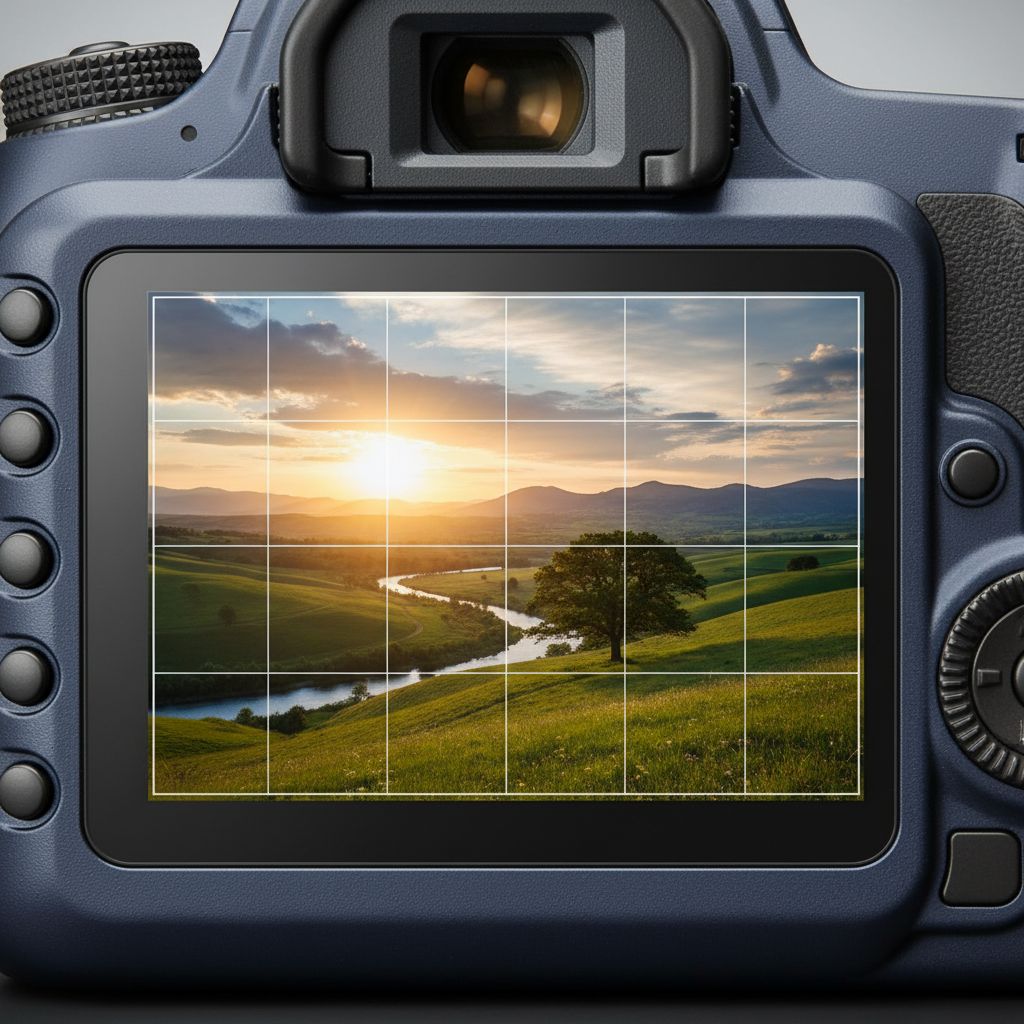
One of the most timeless rules in any photography guide is the rule of thirds. Just picture your frame cut into nine equal squares with two horizontal and two vertical lines. By placing your main subject along these lines or where they cross, you create a more balanced, interesting, and visually pleasing image than if you just stuck it right in the middle.
This easy-to-follow guideline instantly gives your photos a more professional and well-thought-out feel, naturally guiding the viewer's eye through the scene.
The Big Decision: Custom vs. Stock Photography
The whole custom vs.
stock photography debate is a big one for any business trying to nail down its visual strategy. Custom photography means you hire a professional to create images specifically for your brand, your team, and your message. This is really the gold standard for being authentic.
These are the images that tell *your* story, feature *your* people, and show off *your* products in a way that no one else can copy.
It’s a direct investment in your brand’s identity, helping you create a unique visual style that builds a real connection with your audience. Stock photography, on the other hand, is the quick and often cheaper option.
You can find huge libraries of images for pretty much any subject you can think of. But that convenience has a downside. The pictures are, by definition, generic.
That smiling "business team" on your consulting firm's website could pop up on a competitor's site next week.
That lack of personality and emotional connection can water down your brand’s unique feel and, in some cases, even hurt trust if customers spot the images and see them as fake. So, what’s the final call?
Use stock photography, but do it wisely. It can work for abstract concepts, a quick blog post header where a specific image isn't critical, or for internal decks. But when it comes to the heavy hitters, your homepage, "About Us" page, and product galleries, custom photography is unbeatable.
The ROI on authentic imagery, measured in brand equity and customer trust, far outweighs the initial cost.
Your visuals should be as unique as your business itself.
Strategic Placement: A Photography Guide for Marketing Channels
Creating stunning photographs is only half the battle; knowing where and how to use them is what turns those assets into a marketing powerhouse. Your website and its landing pages are the digital front door to your business.
You know what they say about first impressions. High-quality custom photography right on your main pages instantly signals your professionalism and the quality you offer, which can give your conversions a serious boost.
These main pages should be where you put your absolute best, most on-brand imagery.
Social media platforms are always hungry for visual content, and each one has its own personality.
Platforms like Instagram, Pinterest, and even TikTok are all about the visuals, where a powerful story can stop people in their tracks and get them engaged. Go ahead and share behind-the-scenes content, put the spotlight on team members, or create posts so visually interesting that people have to stop scrolling. Insights from resources like Aftershoot show that having a consistent, authentic social media game built on unique photos is a huge factor in growing your reach and building a real community around your brand.

And don’t sleep on your more direct lines of communication.
Adding tailored visuals into your email newsletters and marketing campaigns can be a game-changer for engagement and brand recall.
Let's be honest, an email with a great, relevant image is much more likely to get read and clicked than a wall of plain text. The same idea holds true for all your advertising material, from digital ads to old-school print brochures and billboards.
Professional photos make sure your message slices through the clutter and leaves a real impression.
Building Your Brand and Portfolio with Purpose
Whether you're a business trying to build a visual identity or a photographer selling your services, you need to build your portfolio with a clear goal in mind.
First things first: you need to define your niche and really get to know your target audience. Your photography style and the content you create should be a perfect match for the specific market you're trying to win over.
For example, a photographer focused on the health sector needs a portfolio filled with clean, bright, and empathetic images of facilities and patient interactions, a world away from the dramatic, wide-angle shots you'd see from a real estate photographer. That kind of specialization builds your authority and brings in the clients you actually want.
Your portfolio shouldn't just be a pretty gallery of your work; it needs to be a sales tool that's built to convert. Organize your best work into clear, easy-to-follow galleries that tell a compelling story.
Don't just throw up the final images; weave in your company's value. Talk about the client's problem, how you solved it, and the results they got from the work featured in the photos. As guides from platforms like Format point out, a well-put-together portfolio should naturally lead a potential client from just admiring your work to actually reaching out because you've proven your expertise and the real value you bring.

Finally, you want your website portfolio and your social media to be working together as a team. You should be sharing your work on social media regularly, always linking back to the more in-depth case studies or galleries on your site.
This approach doesn't just show off your skills and expand your reach; it also creates an awesome feedback loop.
You can actually use what you learn from social media engagement to figure out what your audience loves, which helps you sharpen your client targeting and tweak your messaging for campaigns that really connect and build loyalty.
The Unseen Hero: How Photography Supercharges Your SEO
Here’s a secret that many people miss: your amazing photography and your search engine rankings are totally linked. A stunning photo might grab a user's attention, but it needs a solid, well-optimized content strategy around it so search engines can even find it. Think of your website's articles and pages as the frame that holds up your visual masterpiece for the world to see.
Without that frame, even the most incredible art can get lost.
And that's exactly where image SEO comes into play. It's really just a few simple but super important practices.
First off, always use descriptive alt text for your images. Alt text is basically what search engines "read" to figure out what an image is about, and it's also what people see if an image doesn't load.
Weave in relevant keywords but keep it natural. For example, instead of "IMG_8081.jpg," name your file something like "luxury-real-estate-photography-miami.jpg" and write a similar alt text. Also, image file size is a huge deal.
Large, uncompressed images can slow your website down, which hurts user experience and negatively impacts your SEO rankings. Always compress your images before uploading them.
The relationship is symbiotic. Great photos make your content more engaging, which reduces bounce rates and increases the time visitors spend on your site, both of which are positive signals to Google. In turn, high-quality, SEO-optimized content provides the context that helps your images rank in both standard and image searches, driving more organic traffic.
Look, having a stunning visual strategy is fantastic, but when you pair it with a strong content strategy, that’s how you really start to dominate the digital space.
One without the other is like telling only half the story.
A Sector-Specific Photography Guide at a Glance
While the basic principles of good photography apply everywhere, how you use them can change a lot from one business sector to another. Every industry has its own goals, audiences, and messaging needs that call for a specially tailored visual game plan. Understanding these nuances is key to creating images that not only look good but also achieve specific business objectives, whether that's building trust with a patient, selling a property, or showcasing corporate expertise.
The following table breaks down the strategic focus for several key industries, providing a quick reference for your visual content planning.
| Business Sector | Key Photography Applications | Strategic Focus |
|---|---|---|
| E-commerce | Product, lifestyle, team | Clarity, conversion, brand story |
| Real Estate | Property, agent portraits | Space, lighting, trust-building |
| Health Sector | Facilities, staff interaction | Safety, comfort, authenticity |
| Consulting Firms | Team, meetings, knowledge-sharing | Expertise, professionalism |
| Marketing Agencies | Culture, portfolio, case studies | Creativity, client connection |
| Entrepreneurs | Brand, product, founder images | Identity, differentiation |
For an e-commerce business, the focus is squarely on the product. You need perfectly clear images from all angles, shots of the product in use, and a consistent visual style that backs up your brand story. For real estate, photography is all about selling a space and a lifestyle.
That means you'll need wide-angle lenses to make rooms feel big and inviting, bright lighting to create a warm atmosphere, and top-notch agent portraits to build that all-important trust. The health sector, on the other hand, needs to focus on images that scream safety, cleanliness, and compassionate care.
Authentic photos of staff interacting with patients and pristine facilities do far more to build trust than any generic stock image ever could. For consulting firms and marketing agencies, photography is about visualizing the intangible.
Showcasing your team in collaborative meetings, presenting case studies visually, and capturing your unique company culture are all ways to project expertise and creativity.

Bringing It All Together for a Cohesive Brand
We've covered a ton of ground in this photography guide, from the big-picture strategy of custom visuals all the way down to the technical details that make a photo work. But the main takeaway is clear: business photography isn't just decoration anymore. It’s a strategic investment in your brand’s identity, its credibility, and its power to connect with your audience in a real way.
When you ditch the generic stuff and embrace a visual language that's authentically yours, you create a powerful edge that customers notice and that builds lasting trust. That's how you turn casual browsers into loyal, engaged clients.
Executing this vision requires a thoughtful approach that integrates strategy, creativity, and technical skill. It means really getting the specific visual needs of your industry, whether you’re in e-commerce, real estate, or consulting. It means getting the hang of composition and lighting, and then smartly using your finished photos across your website, social media, and ad campaigns.
But here's the catch: creating those amazing images is only one half of a winning digital strategy. Those visuals need a voice, a context, and a platform to be discovered.
You now have the blueprint for your visual identity.
But what about the thousands of words of high-quality, SEO-optimized content needed to surround those images and capture valuable search traffic?
That's precisely where RobotSpeed comes in.
While you focus on creating a stunning visual brand, our AI-powered platform works in the background, automating your SEO content and backlink strategy with just one click. We generate the articles, build the pages, and lock in the links that create the high-ranking home your photography truly deserves. Ready to build a complete digital marketing machine?
Explore how RobotSpeed can amplify your visual strategy today.
Frequently Asked Questions
- How often should I update my business photography?
-
A good rule of thumb is to do a big refresh every 1-2 years, or anytime your team, brand, or services change in a major way. However, you should be continuously creating new visual content for marketing channels like social media and blogs to keep your brand looking fresh and dynamic.
- Can I take professional business photos with a smartphone?
-
Modern smartphones have incredible cameras. For social media or informal blog content, a high-end smartphone used with good lighting and composition principles can produce great results. For your most important website assets, like your homepage banner or team headshots, investing in a professional photographer is almost always worth it for the incredible quality and expertise they provide.
- What's the biggest mistake businesses make with photography?
-
The biggest mistake is hands-down inconsistency. Using a random mix of pro photos, grainy snapshots, and generic stock images just creates a confusing and unprofessional vibe for your brand.
The second-biggest mistake is not optimizing images for the web, which leads to slow-loading pages that drive users crazy and sink your SEO.