
If you're an entrepreneur or run a business, you've probably heard the term SEO thrown around a lot. It sounds technical, maybe a little intimidating, and it often feels like a moving target. But here's the thing you need to know, getting a handle on it is more crucial now than ever before. The digital world is noisy. Every single day, your competitors are fighting for the top spot on Google, and if you’re not in the game, you’re essentially invisible to a huge pool of potential customers actively searching for exactly what you offer. So, let's demystify this powerful strategy. Understanding what is search engine optimization is the first step toward turning your website from a simple online brochure into a lead-generating machine that works for you around the clock.
This guide is designed to strip away the jargon and give you a clear, straightforward look at SEO in 2026. We're going to define SEO in plain English, breaking it down into its core components. Just think of this guide as your roadmap. We're going to break down the big pillars that make any SEO strategy work, from the techy stuff behind your website to the articles you write and the trust you build online. Everything here comes from methods that actually work, with tips straight from industry giants like Google, so you know you're getting solid advice that's up-to-date.
You’ll learn not just what to do, but why you’re doing it. For marketing agencies, this is a perfect resource to share with clients. For e-commerce stores, health sector businesses, consulting firms, and real estate professionals, the practical steps outlined here are your blueprint for attracting highly motivated, organic traffic. Forget about paying for every single click. The goal is to earn your visibility and build a sustainable source of growth for your business, creating a powerful presence that lasts. This isn't about quick tricks or loopholes. It’s about building a solid, trustworthy digital footprint that search engines and customers will reward.
What is Search Engine Optimization Really All About
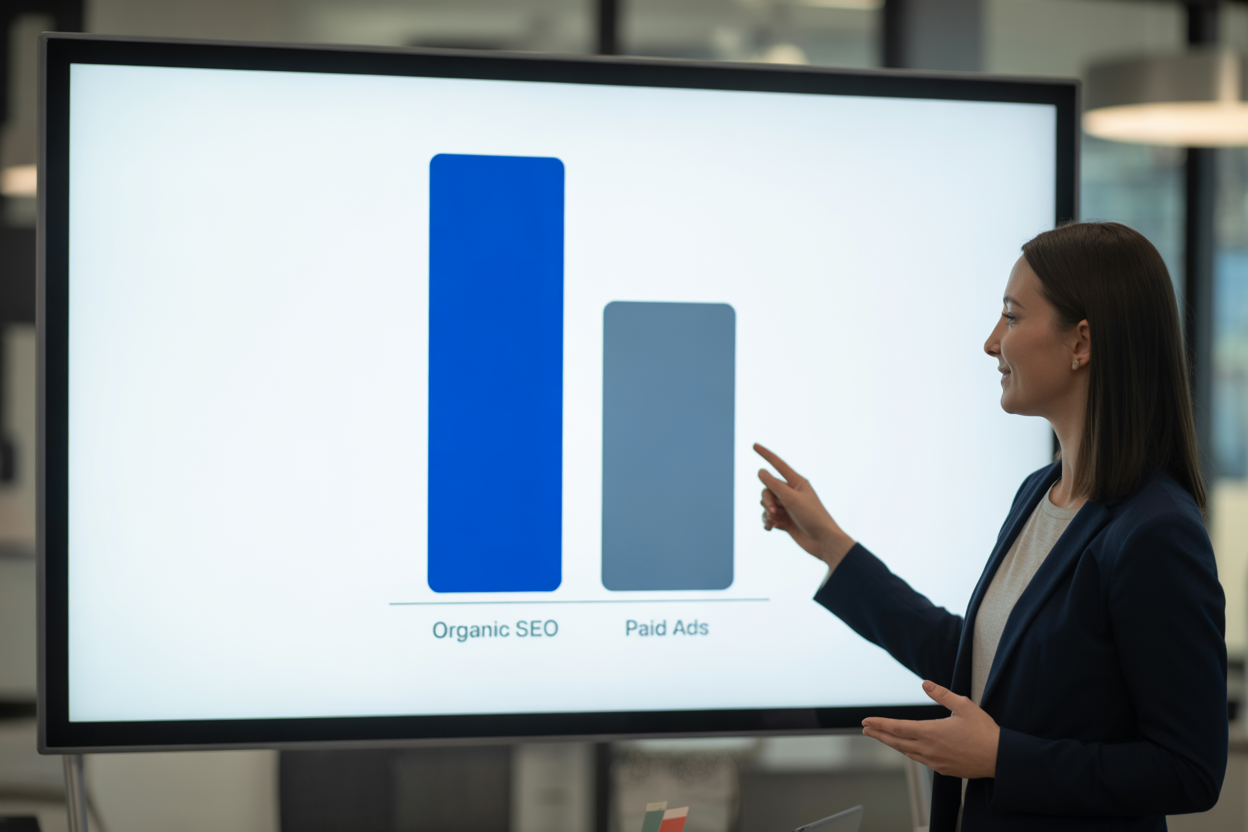
At its heart, answering what is search engine optimization is simple. SEO is the practice of improving your website so it appears higher in the organic, or non-paid, results of search engines like Google and Bing. Here's a fun fact: people just trust organic results way more than paid ads. Popping up at the top organically basically tells people you're legit and relevant. It’s like Google itself is giving you a thumbs-up, and you can't buy that kind of trust. This isn't about throwing money at ads to get to the top; it's about earning your spot by actually being helpful.
To make this work, your website has to be super easy to understand, not just for people, but for search engines, too. Search engines use these little programs, often called crawlers or bots, that zip around the web to find and index all the pages out there. Even Google’s own starter guide explains how these crawlers look at your site’s layout, words, and links to figure out what you're all about and if you're a trustworthy source. So your job is pretty simple: make *their* job easy. That just means your site should be neatly organized, with clear menus and content that actually answers your audience's questions. If a crawler can't figure out what a page is about, it's highly unlikely to show it to a user.
Think of your website as a library. If the books are scattered on the floor with no labels, no one can find what they're looking for. But if the library is well-organized with clear sections, helpful signs, and neatly labeled shelves, visitors can easily find the exact information they need. Technical SEO is like building the library itself with solid architecture, while content is the valuable information inside the books. Both are essential for creating an experience that keeps people coming back, which is exactly what search engines want to promote.

The Four Foundational Pillars of Modern SEO
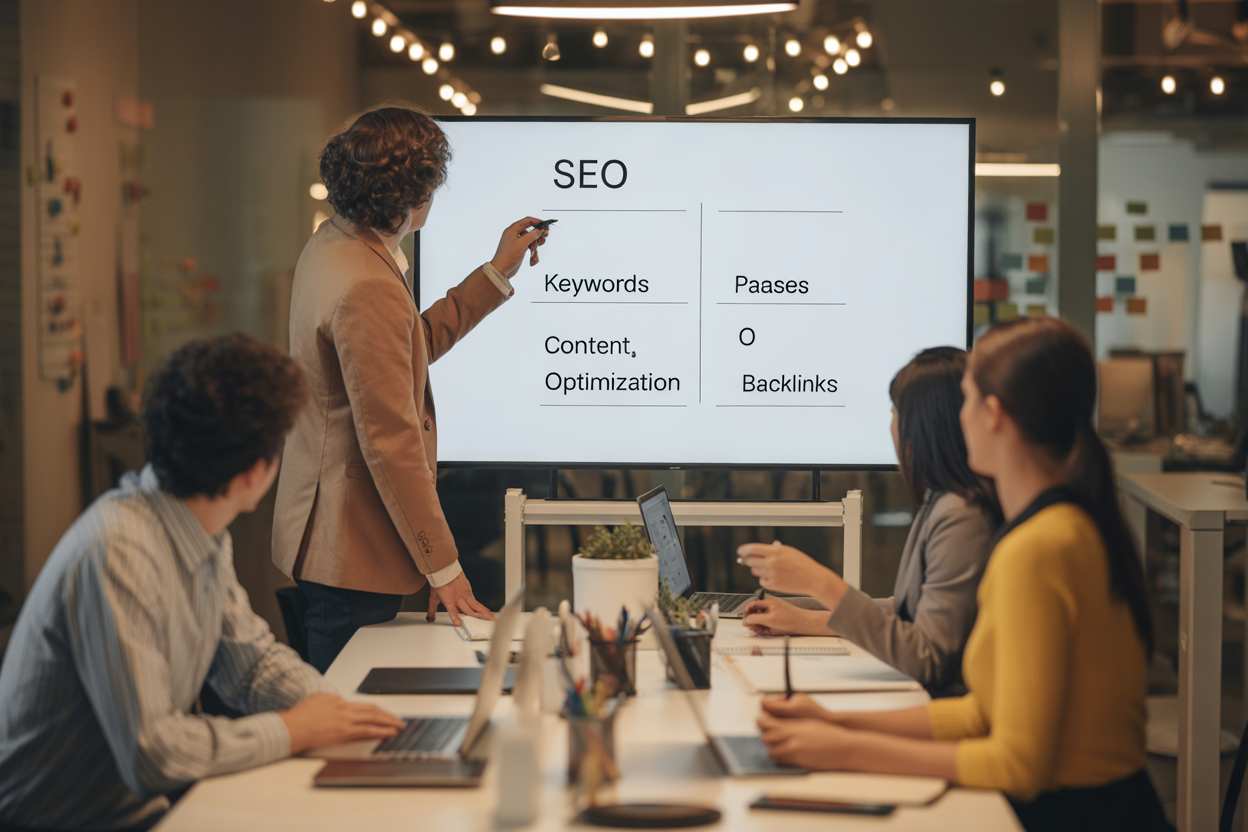
To truly get to grips with SEO, you need to understand that it's not one single activity but a combination of different efforts working together. These efforts are often grouped into four main pillars. Mastering each one is what builds a comprehensive and resilient SEO strategy that can weather algorithm changes and keep you ahead of the competition. Let’s break them down so you can see how they all connect and support each other, creating a powerful foundation for your online presence.
These pillars work in harmony. You can have the best content in the world, but if your site has major technical issues, no one will see it. Likewise, a technically perfect site with thin, unhelpful content won't rank either. And without off-page signals to build authority, even a great site with great content might struggle to get noticed in a competitive market. Here’s a look at what each pillar covers, based on best practices from leading resources like Mangools and Backlinko.
| Pillar | What It Covers | Key Actions |
|---|---|---|
| Technical SEO | Site speed, structure, mobile-friendliness, and crawlability. | Improve loading times, ensure your site works perfectly on mobile devices, and fix any errors that prevent search engines from indexing your site. |
| On-Page SEO | Content, keywords, meta tags, and internal links on your actual pages. | Use relevant keywords naturally in your text, optimize your page titles and meta descriptions, and create clean, descriptive URLs. |
| Content SEO | The quality, relevance, and freshness of the information you provide. | Just focus on creating seriously helpful, well-researched content that's fresh and actually answers the questions people are typing into Google. |
| Off-Page SEO | This covers things like backlinks, people talking about your brand, and anything else that signals you're a trustworthy name in your field. | You'll want to focus on getting links from legit websites in your niche and just generally managing your online reputation to build up that credibility. |
Every one of these pillars has a direct impact on how search engines see your site. A solid technical setup makes sure your site isn't a pain to use, while good on-page work makes your content clear and to the point. Great content makes you look like you know your stuff, and strong off-page SEO is what proves to Google that other respected sites agree. If you ignore any one of these, you're leaving a giant hole in your strategy and missing out on a ton of great organic traffic.
Your First Steps A Practical SEO Checklist
Knowing the theory is one thing, but putting it into practice is where the results happen. Getting started with SEO doesn't need to be overwhelming. You can begin making a significant impact by focusing on a few essential, foundational steps. These actions will set you up for success by giving you the tools to measure your performance, helping you understand your audience, and ensuring your website is built on solid ground. This isn't about becoming a technical wizard overnight. It's about taking logical, manageable steps to get your SEO journey underway.
Setting Up Your SEO Toolkit
First things first, you can't improve what you don't measure. That’s why your initial step should be setting up free, powerful tools from Google and Bing. You need to install Google Search Console and Bing Webmaster Tools immediately. These platforms are like a direct line of communication between your website and the search engines. They show you exactly how your site is performing in search results, which keywords are driving traffic, and they even alert you to critical technical issues that might be hurting your rankings. They are completely free and non-negotiable for anyone serious about SEO.
Next on the list is Google Analytics. While Search Console tells you what happens before a user clicks on your site, Analytics tells you what happens after they arrive. It'll show you where your visitors are coming from, what pages they look at, how long they stick around, and if they're doing what you want them to do, like buying something or filling out a form. Hooking these tools together gives you the full story of your customer's journey, all the way from their search to a final sale. Honestly, this data is gold. It helps you really get to know your audience and proves that all your hard work on SEO is paying off.
Mastering Keywords and Content
Okay, with your tools ready to go, it's time to shift focus to figuring out what your audience is *really* looking for. And that's where keyword research comes into play. It's basically just the work of figuring out the exact words and phrases people are typing into Google to find what you offer. Think like your customer. What problems are they trying to solve? Once you have a list of relevant keywords, you can start creating content that directly answers their questions. The trick, like experts from places like Coursera point out, is to weave these keywords naturally into your text, headings, and titles. Just cramming keywords onto a page is an old trick that definitely doesn't work anymore.
However, simply stuffing keywords into a page won't work anymore. Google's algorithms are incredibly sophisticated and prioritize content that is genuinely useful, high-quality, and relevant. Your primary goal should always be to create the best possible resource on a given topic. Does your blog post fully answer a user's question? Is your product page clear and persuasive? High-quality content is what satisfies users, and when users are happy, search engines are happy. Focusing on quality instead of quantity is really the secret sauce for creating content that doesn't just rank, it turns visitors into actual customers.
Building a Strong Foundation
Alright, let's talk about the bones of your website, its structure. Think about walking into a store with no aisles or signs. It'd be chaos, right? Well, the same thing applies to your website. When your site structure makes sense, it’s a breeze for both people and search engine crawlers to find your most important stuff. This just means sorting your content into logical groups and using links to connect pages that are related to one another. For instance, if you're a real estate agent, your blog post on "home staging tips" should definitely link back to your main page for "services for sellers." Doing this passes authority around your site and helps keep people clicking around longer.
Getting this structure right is a huge part of both technical and on-page SEO, and it's tied directly to making sure your site is fast and works great on phones. In today's world, more people search on their phones than on desktops, so if your site is clunky or slow on a mobile device, you're losing a huge chunk of your audience. A solid, user-friendly foundation is what allows your great content and keyword strategy to truly shine. Without it, you're building on shaky ground.
The Secret Weapon Off Page SEO and Backlinks
Now that we've covered what happens on your website, it's time to look at a factor that carries immense weight in the eyes of search engines: off-page SEO. This primarily revolves around building your website's authority and trustworthiness. Think of it like a reputation in the real world. If many respected people are talking about you and recommending you, others are more likely to trust you. In the digital world, these recommendations come in the form of backlinks.
A backlink is simply a link from another website to yours. However, not all backlinks are created equal. Getting a link from a big, respected site in your field, like a major trade journal or a popular blogger, is basically a massive vote of confidence. It's a clear signal to Google that your stuff is valuable and trustworthy. And honestly, earning these kinds of high-quality backlinks is one of the biggest moves you can make to boost your rankings, especially for those really competitive keywords. It's a cornerstone of any real SEO effort and it's only going to be a bigger deal heading into 2026.
Let's be real: building backlinks can be one of the toughest and most time-sucking parts of SEO. A lot of the time it means you have to create killer content that people just *want* to share and link to, that's what people call link earning. It can also mean you're manually emailing other site owners, trying to build relationships, and showing them how your content could help their readers. For most busy entrepreneurs and marketing teams, that's a huge mountain to climb. It requires consistent effort and expertise, which is precisely why automation solutions that help manage this process are becoming so valuable. Platforms that streamline content creation and backlink outreach can give businesses a massive competitive advantage by handling the heavy lifting.
Why SEO is a Game Changer for Your Business
So why should you, a busy business owner or marketing professional, invest your time and resources into all this? The answer is simple. A strong SEO presence delivers highly qualified, sustainable traffic for free. The people who find you through an organic search are not just browsing. They have actively typed in a query because they have a specific need or problem they want to solve right now. What this means is the traffic you get from SEO is usually way more motivated to buy something, sign up, or engage than people coming from other places.
If you run an e-commerce store, it means pulling in shoppers who are literally searching for the exact things you sell. If you're a consultant, it means popping up right when potential clients are looking for an expert in your field. And for a real estate agent, it's about connecting with local buyers and sellers right when they need help. This kind of traffic, driven by actual intent, is incredibly valuable. And unlike paid ads where the visitors disappear the second you stop paying, a page that ranks well can keep bringing you leads and sales for months, or even years. That's what makes SEO such a powerful long-term play for your business.
But it's not just about traffic. Good SEO actually makes your website a better place for users. When you make your site fast, easy to use on a phone, and simple to get around, you’re not just making Google happy. You're making your customers happy. And a better user experience means people will stick around longer, trust your brand more, and, at the end of the day, buy more stuff. Look, competition online is insane right now. Being easy to find and offering a smooth experience isn't just a nice-to-have anymore. It's a must-have part of any smart business strategy and gives you a huge advantage over competitors who are sleeping on it.
Common SEO Pitfalls and How to Sidestep Them
As you jump into SEO, it’s just as important to know what *not* to do. So many businesses trip over the same common mistakes, killing their SEO efforts before they even have a chance to work. Knowing what these pitfalls are can save you a ton of time and headaches, making sure you're building your strategy the right way from the start. One of the biggest mistakes I see is people just ignoring the tech basics. A slow website or one that isn't optimized for mobile devices will kill your rankings fast, no matter how great your content is. Users expect speed, and Google rewards it.
Another classic mistake is keyword stuffing. This outdated tactic involves cramming a page with as many keywords as possible in an attempt to manipulate search rankings. Today's algorithms are far too smart for this. They see it as a sign of low-quality, spammy content and will penalize your site for it. Your focus should always be on writing great, original stuff that weaves in keywords naturally and actually helps the person reading it. Ignoring content quality is basically a death sentence in today's SEO world. If your articles are thin, sloppy, or just repeat what everyone else is saying, you're never going to get noticed.
And finally, a huge mistake is not building and keeping an eye on your backlinks. So many people get obsessed with their own site and completely forget that what happens *off* their site is a massive piece of the puzzle. Without credible websites linking to you, it's very difficult to build the trust signals Google needs to see you as a leader in your space. On a related note, not even setting up free tools like Google Search Console is a huge missed opportunity. It's like trying to drive with a blindfold on. If you can just sidestep these common mistakes and stick to the four pillars we talked about, you'll build an SEO strategy that really works and lasts.
Getting serious about an SEO strategy is honestly one of the best investments you can make for the future of your business. We've pretty much covered what search engine optimization is all about, breaking it down into those four big pillars: the techy foundation, your on-page content, your off-page authority, and the quality of your writing. Getting how these pieces all fit together is what will finally unlock that steady flow of organic traffic from customers who are already looking for you. Remember, it’s a marathon, not a sprint. The online world and Google's rules are always changing, so your SEO has to be something you're always tweaking, updating, and improving.
Look, anyone can learn these basic ideas and start seeing a difference. But we get it, if you're an entrepreneur or on a busy marketing team, time is everything. The tough part isn't just knowing what to do. It’s finding the hours in the day to consistently create high-quality content, research keywords, and build those all-important backlinks. The execution is often where even the best-laid plans fall apart. This is a common struggle we see across all industries, from e-commerce to consulting.
This is where RobotSpeed can transform your entire approach. Our AI-powered platform was built to solve this exact problem. What if you could get 30 high-quality, SEO-ready articles for your business every single month, without lifting a finger to write them? And picture having 100 backlink credits a day to consistently build up your site's authority. We automate the most tedious, time-sucking parts of SEO. This lets you get back to running your business while we take care of the heavy lifting with content and backlinks. If you're tired of struggling and want to see actual SEO results, check out what RobotSpeed can do for you. Let’s build your online presence, together.