
Search engines have evolved. Gone happen to be the days when stuffing a page with a specific phrase would guarantee a spot on the first page of Google.
Today, the game is about meaning. It is about context.
It is about mastering semantic SEO optimization with AI to create a web of content that search engines intuitively understand and trust.
Honestly, this shift is a huge opportunity for entrepreneurs, marketing agencies, and businesses in pretty much any sector, from health to real estate. Ever wonder how a competitor is outranking you, even though their page has fewer keywords? The answer is almost always semantic search.
They're not just matching words; they're actually answering questions and solving problems in a way that makes sense to Google's super-smart AI.
The growth of AI SEO ranking factors 2024 is speeding everything up. Now that we have tools to automate and figure out these patterns, you really need a mix of smart human strategy and machine-like precision to stay on top.
So, let's walk through exactly how you can build a semantic strategy that actually drives traffic and turns those visitors into customers.

The Evolution of Search: From Strings to Things
Semantic SEO optimization with AI isn't just another buzzword, it’s a total shift in how search engines figure out what your content is about.
Think back: Google used to just look at strings of characters.
If you typed in "best running shoes," it would hunt for pages with that exact phrase.
But now, Google looks for "things," or what we call entities.
It gets that "running shoes" connects to concepts like "marathon training," "arch support," "Nike," and "jogging."
This way of thinking is a game-changer for any business trying to stay visible as search becomes more and more AI-driven. Today, search engines use things like schema markup and structured data to map out the relationships between all these entities.
These entities can be anything, people, places, products, ideas, you name it. When search engines get these connections, they can serve up results that are much closer to what people are actually looking for.
Here's the key takeaway for Google's algorithm: the relevance to the user's intent is way more important than just the keywords and topics on their own. This distinction matters because it means your content strategy must evolve. You cannot just think in keywords anymore.
You have to think in meanings. The concepts behind the search queries are what allow you to rank for thousands of keywords with a single piece of content.
Why AI Vectors Changing the Game
You might hear the term "vector" thrown around in technical SEO circles.
Here is what it means for you.
So, what are AI vectors?
Think of them as numerical fingerprints for words, phrases, and even whole documents. They're what allow search engines to match your web content with the way AI systems actually understand context.
So instead of just matching keywords, these vectors help the AI models grasp the *entire meaning* of your content.
This kind of deep contextual matching makes your content easy for AI systems to recognize, which boosts both your discoverability and your authority.
When you nail your semantic SEO optimization with AI, you're basically speaking the search engine's native language.
AI vectors help the models connect the dots between synonyms and user intent, closing the gap between what someone types and what they really mean.
Core Semantic Strategies for 2025
To stay competitive in the next few years, you've got to pivot. Semantic SEO optimization with AI demands a real strategy that goes way beyond just sprinkling in a few keywords. We're in a world where quality and depth win out over frequency every time.
Prioritizing User Intent Over Keywords
In 2025, a smart semantic SEO strategy is all about deeply understanding what the user is *really* trying to do. It’s a huge shift away from just focusing on keywords. You have to dig into the context, the meaning, and the goals behind every search.
When you create content that uses the right keywords but also truly aligns with what users expect to find, you're delivering something genuinely comprehensive and valuable.
Think about someone searching for "CRM software." Their intent could be all over the place. Are they just looking for a simple definition? A list of the top companies?
A free trial?
Maybe some how-to guides for integration?
A good semantic approach will cover all these angles within a topic cluster (we'll get to that in a second). This makes for a much better search experience and tells Google that you're the one to trust on this topic.
The Power of Keyword Clustering
This is where the real magic happens. Instead of chasing single keywords, targeting groups of related keywords in semantic clusters boosts your relevance and expands your organic reach like crazy.
We often call this creating content clusters with AI.
The idea is to build out comprehensive pillar pages that cover a broad subject from top to bottom.
These pages act as your main hubs.
From there, you connect out to more specific subtopic pages. This structured approach helps search engines really understand how all your content fits together. And what does that do?
It cranks up your overall topical authority. Let's break it down with a practical example for a business in the health sector.
Let's look at a practical example for a health sector business.
Pillar Page: "Complete Guide to Physiotherapy."
Cluster Pages:
1. "Physiotherapy for back pain"
2.
"Post-surgery rehabilitation techniques"
3. "Sports injury prevention tips"
4.
"Cost of physiotherapy sessions"
Each of these cluster pages links back to the pillar, and the pillar links to them. This signals to Google that you are an expert on "Physiotherapy." Manually writing thirty of these articles to build a cluster can be exhausting.
This is where leveraging a platform like RobotSpeed becomes a strategic advantage, as it can automate the generation of these 30 articles per month, ensuring your clusters are built rapidly and consistently.
Enhance Topical Depth and Content Length
You must go beyond superficial keyword stuffing. Repetition is out; nuance is in.
Increase content length with in-depth exploration of your primary topic.
Although content length isn't an official ranking factor inherently, studies link longer content to stronger semantic signals. It usually correlates with higher-ranking positions in both traditional search results and generative AI engines.
Consulting firms can really cash in on this. Let's be honest, a 500-word post about "Business Strategy" isn't going to help anyone.
But a 3,000-word guide that dives deep into market analysis, competitive advantage, and operational efficiency?
That's what makes you look like a true thought leader.
It shows you have deep expertise and builds serious credibility.
Synonyms and Related Terms
On a related note, Google's advanced algorithms and NLP models are great at understanding synonyms, and you should absolutely use this to your advantage. Weaving these related terms into your content naturally boosts your semantic signals and just makes it easier to read.
You can sprinkle them in page titles, meta descriptions, headers, and even image alt text. These related terms (sometimes called LSI keywords) give your content much more semantic depth.
Doing this helps AI systems get a much better feel for how broad your topic is, and it keeps you from getting dinged for keyword stuffing. Even better, it mirrors the way generative AI processes natural, human-like language. You are writing for humans, but you are structuring for the machine.
Step-by-Step Implementation Guide to Semantic SEO
Knowing the theory is great, but execution pays the bills.
Here is how you actually implement semantic SEO optimization with AI into your workflow.
Step 1: Deep Dive into User Intent
Begin simply. deeply analyze what your target audience actually seeks. For real estate businesses, this might mean understanding nuances.
Is the person looking for property values?
Guides to different neighborhoods?
Or maybe investment strategies?
These are all different intents hiding behind very similar keywords.
For health businesses, it's about figuring out if users want educational articles or actual treatment options.
A great way to figure this out is to just go look at the top 10 results for your main keywords. What kind of content is already ranking? Is it a calculator?
A straightforward blog post?
A video?
Whatever it is, you should match that format.
Step 2: Strategic Content Outlines
Now for Step 2: Strategic Content Outlines, and trust me, never start writing without a map. You'll want to create content outlines that tackle a bunch of related topics and questions all within the same semantic cluster.
This structured approach makes sure you cover everything. It's like sending a flare up to search engines about your topical authority, right from your H2s and H3s.
Your outline should basically be a list of all the questions a user might have.
If you're writing about "mortgages," for example, your outline absolutely needs to cover rates, pre-approval, options for bad credit, and refinancing.
If you skip one, you're leaving a semantic gap that a competitor can just waltz into.
Step 3: Produce Entity-Rich Content
Now, Step 3: Produce Entity-Rich Content, it's time to create. This means creating detailed content that directly answers those "People Also Ask" questions you see on Google. You need to address every part of the user's intent.
Marketing agencies can really use this to their advantage by building out content strategies that hit multiple semantic angles for their clients. The goal is to be the final click.
You want the user to land on your page and never need to return to Google for more info.
Step 4: Structured Data and Schema Markup
This is the technical side of semantic SEO optimization with AI.
Implement structured data to help search engines understand the relationships between entities on your pages. Use schema markup to describe your business, products, and services.
For e-commerce businesses, mark up product details, pricing, availability, and reviews.
For real estate companies, mark up property details, location info, and agent credentials.
This code lives in the background of your site but shouts your relevance to Google.
It is essential for getting those rich snippets in search results.
Step 5: Topic Clustering Architecture
Group semantically related content into topic clusters.
Then, link them together using descriptive anchor text. This is a huge clue for AI systems to help them understand context and relationships.
It not only improves your internal linking but also makes it way more likely you'll link out to other relevant content. All of this keeps users on your site longer, which is a huge engagement signal for Google.
Leveraging AI Tools and Automation
Now, let's talk about AI tools and automation, because the amount of work it takes to really dominate with semantics is no joke.
This is where AI SEO ranking factors 2024 and automation really come into play.
Let's face it, you can't do all this by hand.
AI-Powered Content Analysis
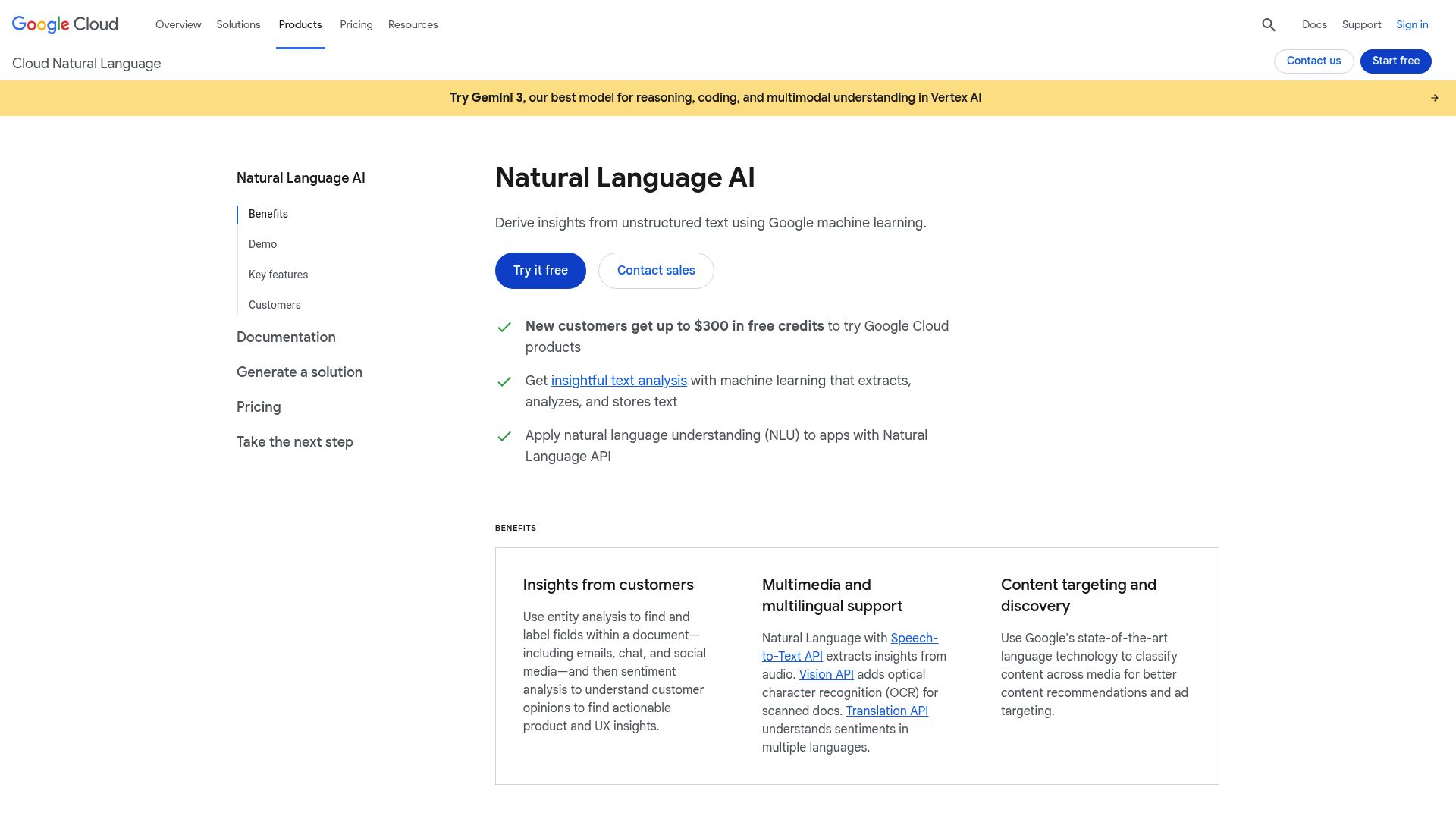
Tools like Google's NLP API and Screaming Frog are great for helping you find content gaps with AI-powered analysis. They'll point out where you have semantic overlap or pages that just aren't relevant enough.
You can then use those insights to sharpen your strategy. You might even discover you have three different articles all fighting for the same keyword (a classic case of cannibalization).
The fix?
Combine them into one monster guide to really cement your topical authority.
Semantic Gap Analysis
Look for what is missing. Conduct a semantic gap analysis. Look for missing entities and synonyms relevant to your industry.
Are there missing connections between entities that should be linked?
Are you missing attributes that provide a better understanding of existing entities?
For example, if you write about "coffee makers" but never mention "brewing temperature" or "grind size," you have a semantic gap. Google expects those entities to appear together.
The Semrush AI Visibility tool can assist with identifying these gaps, or you can use comprehensive solutions that automate the research phase.
AI-Assisted Entity Extraction
Don't forget about AI-assisted entity extraction. Honestly, large language models (LLMs) are mind-blowingly good at spotting patterns. Use them to extract key entities from your existing marketing and product content.
Identify topic relationships and organize them into pillars. Use them to find synonyms and related words.
You can even ask them to generate schema markup automatically.
This is where the synergy with a platform like RobotSpeed really starts to click.
While analysis tools tell you what to do, actually doing it is the real bottleneck. RobotSpeed handles the heavy lifting of generating content and getting backlinks (with 100 credits daily), so you can fill those semantic gaps at scale without having to hire a huge content team.

Predicting AI Overview Visibility
We're stepping into the era of the AI Overview (what we used to call SGE).
If you want to have a good shot at your content showing up there, you need to work backwards from the current results.
Go gather the text from AI Overviews for your most important entities and keywords.
Pinpoint the sources that those AI overviews are citing. Then, you can use an LLM to analyze both the overviews and the sources they're pulling from. Compare all that to your own content.
Then, tweak your content to better match the depth, structure, and entity connections you see in the AI-generated overviews that are already out there. If you notice the AI is citing sources that use specific stats or definitions, you need to make sure your content has those exact same semantic triggers.
Building E-E-A-T Signals Through Semantic SEO
You've probably heard E-E-A-T being thrown around: Experience, Expertise, Authoritativeness, and Trustworthiness.
They're pretty much the cornerstones of semantic SEO success. The cool thing is, when you start using semantic SEO optimization with AI strategies, you naturally start building these signals.
Clear, structured content makes it easier for generative AI models to figure out exactly what you're saying. Being comprehensive shows you know your stuff.
Using natural language makes your content more readable for both people and AI. And focusing on the user ensures your content actually helps them.
And staying relevant to keywords keeps you aligned with what people are searching for. This is especially important for businesses in the health sector.
Proving you're trustworthy is simply non-negotiable.
For consulting firms, your authority has a direct line to how many clients you get. Building out a semantic web of top-notch content is the single best way to show Google that you're a serious player in your industry.
Industry-Specific Applications
So, how does this actually apply to your business?
Let's break it down by industry.
Real Estate Businesses
For real estate businesses, everything is hyper-local and packed with data.
You should use semantic SEO by building content clusters around different neighborhoods, property types, and the kinds of buyers you work with. Don't just list houses.
You need to create guides on "Living in [Neighborhood]." Talk about the schools, walkability, local coffee shops, and even crime rates (but be careful with that one).
You should also go all-in on using schema markup for your property listings. It's also smart to create in-depth guides that speak directly to the different anxieties of a first-time buyer compared to a seasoned investor.
E-Commerce Businesses
For e-commerce businesses, you'll want to focus on semantically optimizing your product pages. Link related products together based on how they're used, not just what category they're in.
Your category pages should be optimized with rich descriptions for every entity, and you need to create content that walks with the customer through their entire buying journey. Think about it: someone buying a "hiking tent" is probably also wondering about "waterproofing" and "how to pick a campsite." You need to be the source for that info.
Health Sector Businesses
For health sector businesses, the stakes are obviously much higher.
You have to prioritize semantic depth when you're creating medical and wellness content.
Make sure to use proper medical terms right alongside everyday language (synonyms are your best friend here). Build out deep topic clusters around health conditions, making sure to include treatments, preventive measures, and recovery statistics, especially since one study found 80% of internet users have searched for health topics online.
Ensure E-E-A-T signals are prominently featured; bios of medical reviewers are distinct semantic entities that Google looks for.
Marketing Agencies and Consulting Firms
You are selling expertise. Develop semantic clusters around service offerings and the industries you serve.
Create pillar content that demonstrates thought leadership. Link to specialized subtopic pages that address specific client challenges. If you offer "SEO Services," you need clusters on "Local SEO," "Technical Audits," and "Link Building." It shows you understand the entire ecosystem of your service.

The Future of Content is Semantic
We are looking at a future where the search box becomes a conversation. Semantic SEO optimization with AI has moved beyond optional optimization to become essential.
The strategies that are going to win in 2025 will be all about meaning, context, and user intent, not just keyword density.
By getting a handle on semantic relationships and using AI tools for analysis, you're setting your brand up for long-term success.
Using the right schema markup and building your topical authority with smart content clusters is how you future-proof your visibility in search.
It doesn't matter if you're in e-commerce, real estate, or healthcare, the end goal is to create content that both real people and AI systems agree is truly valuable.
Look, it takes work and it definitely requires consistency. But the payoff, lasting traffic, better conversion rates, and real authority, is totally worth it.
And if the sheer volume of content you need to create sounds overwhelming, just remember that automation is your best friend.
Services that can handle generating articles and backlinks for you let you focus on the big-picture strategy while your semantic clusters get built out automatically in the background. So, are you ready to stop chasing keywords and start building real authority?
Ready to stop chasing keywords and start building authority?
Discover how RobotSpeed can automate your semantic content strategy and boost your rankings today.
FAQ
What is the difference between traditional SEO and semantic SEO?
Traditional SEO focuses on keywords and backlinks to specific pages.
Semantic SEO focuses on topics, user intent, and the relationships between different concepts (entities) to cover a subject comprehensively.
How does AI help with creating content clusters?
AI is just so much faster than a person at sifting through mountains of data to find related topics, synonyms, and the questions users are asking. It can even generate outlines and full articles that make sure every angle of a topic is covered, so you don't end up with any semantic gaps.
Why are backlinks still important in semantic SEO?
Backlinks are basically votes of confidence from other sites. When we're talking about semantics, getting backlinks from authoritative sites in your niche really drives home your topical authority. That's why automation services like RobotSpeed, which provide daily backlink credits, are so helpful for building this authority over time.
Can semantic SEO help with AI Overviews (SGE)?
Absolutely. AI Overviews lean heavily on understanding entities and finding direct answers to questions. If you structure your data well and give clear, accurate answers inside your in-depth content, you've got a much better shot at being featured.