
You know that sinking feeling in your stomach when you open a spreadsheet filled with thousands of rows of crawl data?
That's the stuff of nightmares for digital marketers, and we've all been there. You're just staring at a list of 404s, broken redirects, and missing meta tags, wondering how on earth you'll find the time to fix them.
But the thing about SEO today is... it's moving faster than any person can realistically keep up with by hand.
And that’s exactly where the game changes.
We're not just talking about basic crawlers that spit out a list of error codes anymore. We're talking about using an AI Content Agent to get deep into the very DNA of your website. It’s like switching from a magnifying glass to an electron microscope.
While old-school audits tell you what’s broken, an AI-powered analysis explains why it matters and, crucially, how to get it fixed right away. This is more than just a time-saver; it’s about survival in a search landscape that's completely run by machine learning now.
When you use an intelligent agent to audit your site, you're not just getting a static report. You are tapping into a live blueprint of your digital presence.
Of course, it looks at the technical infrastructure. But it's also analyzing semantic relevance, predicting shifts in rankings, and spotting opportunities your competitors haven't even thought of. If you're a business trying to grow your online presence without bringing on a huge agency, figuring out what an AI Content Agent can show you is your first real step toward getting a serious competitive edge.
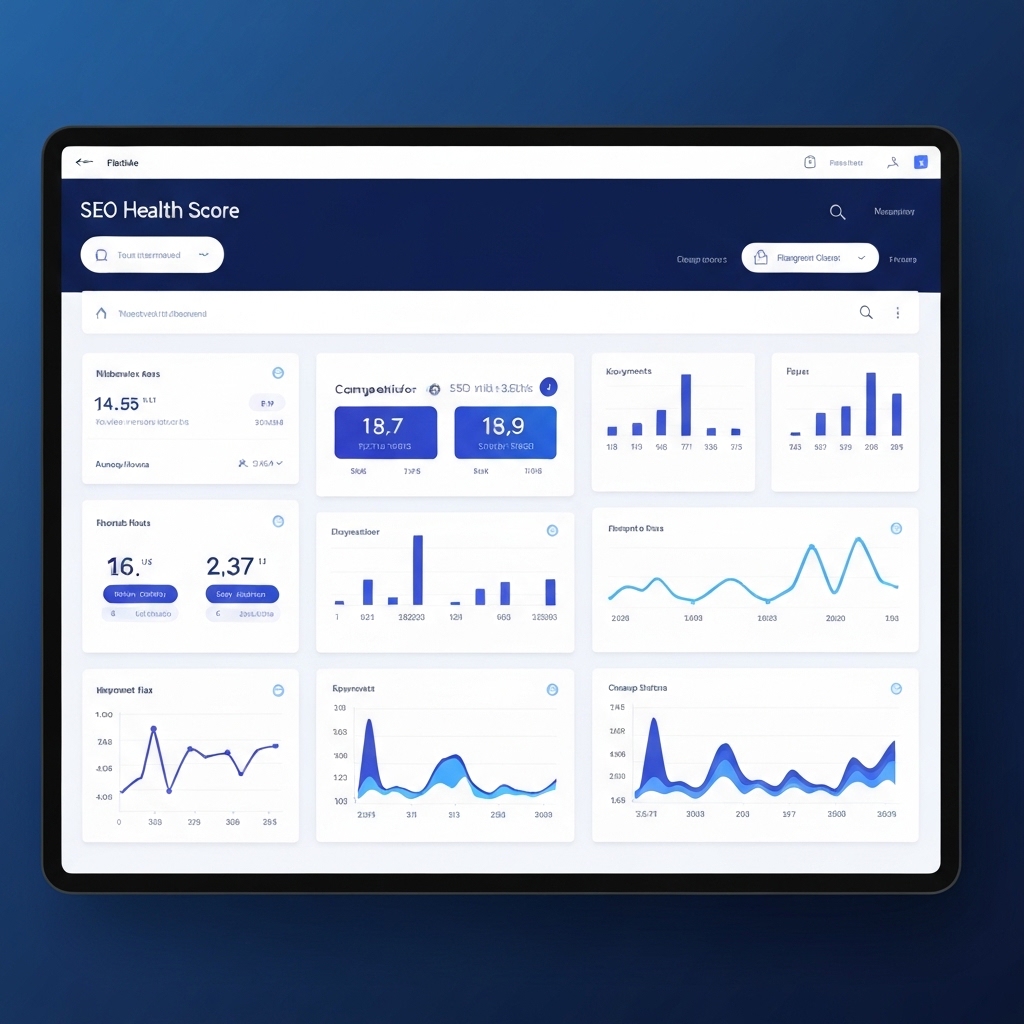
In this guide, we're going to pull back the curtain on what a full AI audit really looks like. We’ll dive into how tools like RobotSpeed leverage powerful algorithms to do the heavy lifting for you, transforming 40 hours of manual analysis into real, actionable insights in minutes. If you’re tired of the spreadsheet headaches and want to start seeing actual growth, then you've come to the right place.
The Evolution of Auditing: Beyond the Spreadsheet
Let's be real for a minute: traditional SEO audits are a relic. They’re just a snapshot in time.
You might run a crawl on a Monday, take three days to go through it, and by the time Friday rolls around, that data is already out of date. Think about it: Google's algorithms change thousands of times a year.
A static audit just can't keep up with how fluid the search world is.
That's why moving to an AI Content Agent isn't just some passing trend, it's a flat-out necessity.
An AI agent doesn't just "crawl" your website; it actually understands it.
It reads your content just like a person would, but it crunches the numbers like a supercomputer. Where a human might overlook a subtle pattern in your internal linking, an AI will spot it in a heartbeat. It's constantly connecting the dots between your server log data and your Google Search Console performance in real-time.
Getting this kind of deep insight used to be something only huge enterprise companies with big data science teams could afford. Now, thanks to subscription tools like RobotSpeed, it's something mid-sized businesses can get for just a fraction of that cost.
Just think about that efficiency gap for a second. Manual audits can take days, while an AI audit is done in minutes. But it's not just about speed.
The real game-changer is the fact that the analysis never stops. An AI agent is like a guard that never sleeps. It doesn’t clock out at 5 PM; it’s watching your site 24/7 and catches problems the second they pop up.
Making that shift from just reacting to problems to actively preventing them is what separates the sites that get stuck from the ones that take off.
Furthermore, the cognitive load removed from your team is massive. Instead of spending their energy hunting for problems, your team can focus on strategy and creativity. The AI handles the grunt work.
It identifies the gaps.
It even suggests the content. This is the new standard. If you are still relying on manual checklists, you are already falling behind.
Technical SEO Deep Dive: Infrastructure and Accessibility
When an AI Content Agent performs a technical deep dive, it goes far beyond checking for broken links. It looks at the fundamental architecture of your website. One of the first things it examines is your crawl budget efficiency.
Search engines have limited resources. If Googlebot spends all its time crawling low-value generated pages or getting stuck in redirect loops, it won't index your money pages. AI agents dig into your server logs to show you exactly how search bots are interacting with your site, pointing out bottlenecks that most traditional tools would never catch.
And then there's JavaScript.
Modern websites are packed with it, and old-school crawlers really struggle to run it all, which means they aren’t seeing what your users actually see. But advanced AI agents can render the entire page, just like a browser, spotting issues where your most important content might be trapped behind a script.
They're also checking for layout shifts to make sure what Google sees is exactly what you want it to see for ranking. This stuff is absolutely critical for keeping your Core Web Vitals in good shape, which we all know is a huge ranking factor now.
Structured data is another place where AI really shines.
Getting your Schema markup right helps search engines make sense of your content.
But doing it by hand?
It's way too easy to make mistakes. An AI audit, on the other hand, scans your whole site for schema opportunities and doesn't just point out where it's missing.
It actually understands the relationships between things on your page and can whip up the correct JSON-LD code to fix it for you.
That ability to work on its own is what finally closes the gap between finding a problem and actually getting it solved.

And don't even get me started on the complexities of international SEO. If you are targeting global markets, you need to ensure your hreflang tags are implemented correctly to avoid duplicate content issues.
It is a headache to manage manually. An AI agent cross-references all your regional pages instantly, ensuring that the right version of your site is served to the right user. This level of technical precision is what builds a solid foundation for organic growth.
Content Quality & Semantic Analysis
Here is where things get really interesting. Not too long ago, content audits were all about keyword density.
You know, did you say "shoe repair" enough times on the page?
That whole approach is completely dead now. Search engines use semantic understanding to figure out how good and relevant your page really is.
An AI Content Agent looks at your content through that same semantic lens, analyzing entities, concepts, and how deep your information goes.
Suddenly, the audit starts showing you "topical gaps" in a way you've never seen.
It's constantly benchmarking your content against what the top competitors are doing for any given keyword. And it’s not just counting words, either.
It’s analyzing all the little subtopics they're covering that you completely missed. So, if you wrote about "coffee machines" but your top competitors are all talking about "bar pressure" and "grinder settings," the AI flags that as a major semantic gap.
It will tell you precisely which concepts you need to add to your page to build up real topical authority.
Readability and engagement signals are also part of this analysis. The AI acts as a simulation of your ideal reader.
It scores your content based on how easy it is to digest. It looks at sentence structure, paragraph length, and the use of active voice. It highlights sections that are "fluffy" or provide little value, challenging you to tighten up the copy.
This ensures that your content isn't just optimized for bots, but creates a compelling experience for humans.
We also need to consider content freshness. Google loves up-to-date information.
An AI agent tracks the age of your content and compares it against the volatility of the SERPs (Search Engine Results Pages).
If the top results for your target keywords have all been updated in the last month and your page hasn't been touched in a year, the audit will flag this as a critical priority. It helps you maintain a "living" content strategy rather than a digital graveyard.
Uncovering Hidden Keyword Opportunities
You know, most people go about keyword research completely backward. They hunt for high-volume keywords and then try to force them into their content. An AI Content Agent completely flips that script.
It actually uses predictive auditing to spot trends before they go mainstream.
By looking at search patterns and what's happening on social media, the AI can suggest topics that are about to blow up, giving you a huge first-mover advantage. That's how you start ranking for keywords before your competition even knows they're a thing.
The agent is also on the lookout for what we call "striking distance" keywords, those terms where you're already ranking on page two or at the bottom of page one. You might not even know you're ranking for them, but the audit shines a spotlight on these easy wins.
It will suggest small changes, like adding a new paragraph or tweaking a header, that can bump those keywords right into the top 3 spots. It is about maximizing the value of the assets you already have.
Another powerful feature is the analysis of Featured Snippet opportunities. The AI scans your content and compares it to the current snippet holders.
It identifies questions you have answered that could be formatted better to win that "position zero." Maybe you need a list format, or perhaps a direct answer box is required.
The agent provides these structural recommendations, turning your content into snippet bait.
Finally, there is the aspect of intent matching.
Sometimes you rank for a keyword, but the traffic doesn't convert. The audit analyzes the search intent behind the query. If you are trying to sell a product on a keyword where users are looking for informational guides, the AI will flag this mismatch.
This is how you make sure your content's format perfectly matches what people are searching for, which helps boost both your rankings and your conversion rates.
The Backlink Landscape: Quality Over Quantity
Backlinks are still one of the most powerful ranking signals out there, but let's be honest, it's a risky game.
A single bad link can completely tank your authority. A generic Competitor & Site Analysis from an older tool might just dump a list of links on you and call it a day. An AI agent, on the other hand, actually digs in to assess the toxicity and relevance of your entire backlink profile.
It checks the context of every site that links to you.
Is it on-topic?
Is it sending you any real traffic?
The audit also runs a gap analysis against your competition, but it doesn't just tell you, "Competitor A has 100 more links." It points out the specific domains that are linking to several of your competitors but not to you, those are your golden opportunities. The AI can also analyze your anchor text distribution to make sure your profile looks natural and not spammy to Google.
If you're overdoing it with "exact match" anchors, the agent will flag it as a potential penalty risk.
And what about internal linking?
It's something people almost always forget.
An AI audit actually maps out your site's internal link graph visually. It quickly finds "orphan pages", those pages with zero internal links pointing to them, making them practically invisible to search engines. Then, the AI suggests smart internal linking paths to send link juice from your strongest pages over to your newer content.
Doing this gives the indexing speed and ranking potential of your new articles an immediate boost.
It can even help you reverse-engineer what your competitors are up to. By analyzing how quickly they're getting new links, the AI can figure out their outreach strategy. Are they landing a bunch of guest posts?
Getting mentioned in the news?
This is the kind of intel that lets you adjust your own partnership strategies.
Even local businesses, like a specialized locksmith service, can use this to see how local citations and directory links affect their rankings in the map pack.
Real-Time Monitoring vs. Snapshots
We kind of touched on this earlier, but it's so important that it needs its own section. The single biggest problem with old-school SEO is the painful time lag.
You might fix a technical bug today, but you won't know it broke again next week until you run your next monthly audit. An AI content agent, however, is always watching.
It establishes a baseline for your site's health and pings you the second it spots an anomaly.
So if your page load time suddenly spikes, you get an alert.
If one of your most important landing pages accidentally gets a "no-index" tag, you'll know about it in minutes, not weeks.
This real-time feedback loop allows for something we call "predictive maintenance." It's like how modern cars warn you before a part fails, an AI agent can warn you when a performance trend starts heading south. For instance, if it sees a slow but steady drop in the click-through rate for one of your top pages, it'll suggest you rewrite the meta description before you lose that ranking. Playing this kind of defense is crucial for protecting your revenue.
It also works for monitoring uptime and server performance when you get a big surge in traffic.
Let's say you launch a marketing campaign and your traffic goes through the roof; the AI keeps an eye on how your server is handling that load from an SEO perspective. It makes sure the user experience stays solid, which is super important because you know Google is tracking all those user behavior signals. A site that crashes or even just slows down under pressure is going to lose authority fast.
From Observation to Action with Automated Fixes
Reporting on problems is easy. Fixing them is the hard part.
This is where an AI Content Agent truly shines, and it’s where platforms like RobotSpeed provide incredible value as we move toward a world of autonomous SEO. A full audit from an AI doesn't just give you a to-do list.
It might generate three optimized meta descriptions for a page and, if you give it the nod, push the best one live to your CMS. That right there is a total game-changer.
Imagine getting an audit that says, "Hey, your article on 'Blue Widgets' is slipping. "We've drafted three new paragraphs targeting fresh 'Blue Widget' queries. Just click here to add them." That's the reality we're building.
The AI can automatically resize and compress images that are slowing down your site.
It can update outdated dates in your content titles.
It bridges the gap between knowing what to do and actually doing it.
What this does is create a totally closed-loop system where the audit fuels the strategy, and the strategy drives the work, all with almost no human friction.
For businesses on a mid-range budget, this tool can effectively do the work of a junior SEO specialist. You are getting the output of a human analyst and a content writer rolled into one software subscription.
The ROI becomes undeniable when you calculate the hours saved on manual implementation tasks.
Competitive Analysis & Strategic Positioning
You cannot win if you don't know who you are fighting. An AI audit provides a level of competitive espionage that is almost unfair. It monitors your competitors' content strategies in real-time.
If a competitor tweaks their pricing page or adds a new service section, the agent logs it.
It lets you in on their pivot before the rest of the market even notices.
The analysis also goes deeper into their "content velocity." How many articles are they actually publishing each week?
How long are their posts?
What sources do they lean on?
RobotSpeed’s analysis features let you measure your own output against the industry leaders. If you see the top 3 competitors are publishing 5,000 words a week and you're only managing 500, the data makes it brutally clear why you might be falling behind.
It also spots "content decay" on your rivals' sites.
If their most popular guide hasn't been updated in three years, that's blood in the water.
The AI flags this as a major vulnerability and then guides you to create a better, fresher version of that topic so you can steal their traffic.
It is strategic warfare based on data, not guesses.
Predictive Optimization & Performance Forecasting
Business owners love certainty. SEO has traditionally been uncertain.
"It depends" is the classic answer to "When will I rank?" An AI Content Agent brings probability into the mix.
By analyzing historical data and current trends, it can forecast the potential traffic impact of specific optimizations. It creates a prioritized task list based on ROI.
For example: "Fixing this technical error will likely give you a 5% traffic lift.
Writing this new article has a potential 20% lift." This lets you make much smarter business decisions.
You can finally put your budget toward the tasks that have the highest chance of a real return. It turns SEO from a guessing game into a predictable revenue driver.
The agent can run simulations, like, "If we boost our domain authority by 5 points, how many more keywords can we expect to rank for?" This modeling helps in setting realistic goals and managing stakeholder expectations.
Moreover, it helps in A/B testing at scale. The AI can suggest title tag variations for different segments of your site and track the performance difference over time. It continually learns what works specifically for your industry and your audience, refining its recommendations the longer you use it.
Structuring the Data: Prioritization is Key
A thousand errors on a spreadsheet is paralyzing.
A prioritized roadmap is empowering.
The final, and perhaps most important, revelation of an AI audit is focus.
The agent categorizes issues by severity and effort. It distinguishes between "critical blockers" that are killing your revenue and "nice-to-haves" that can wait until next quarter.
For a business operating on a $99/month budget, you cannot fix everything at once.
You need to know the three things you must do today. The AI gives you that clarity. It might tell you, "Forget about the missing alt tags for now.
Focus entirely on these 5 broken backlinks." This kind of guidance ensures that every minute you spend on SEO actually moves the needle.
It also organizes all this data visually.
Instead of endless rows of text, you get things like heatmaps and trend lines.
It makes the data easy to understand for managers who aren't technical SEO experts. You can show the dashboard to a CEO or a client, and they will immediately understand the health of the site and the progress being made.
Integration & Workflow Automation
Finally, an AI Content Agent doesn't live in a silo. It integrates with your ecosystem.
It connects to your WordPress, your Wix, or your Shopify store.
It plugs right into your analytics.
This deep connectivity means the audit’s findings flow straight into your existing workflow.
You can finally stop copy-pasting data between different tools.
At RobotSpeed, we're convinced this kind of integration is the future.
Imagine an error being detected, a ticket automatically getting created in your project management software, and a draft fix being prepared, all without you lifting a finger. That's the level of true automation we are pushing for.
It effectively turns your website into a self-healing, self-optimizing asset.
Conclusion
The days of just relying on gut feelings and manual checklists are long gone. A full SEO audit from an AI Content Agent uncovers a level of information that was pretty much invisible before.
It finds technical issues, semantic gaps, and competitive openings that can completely reshape your digital strategy. But even more importantly, it gives you the tools to get things fixed, and fast.
For businesses looking to compete in a saturated market, the ability to move fast is your only advantage.
By leveraging AI to automate the research, writing, and technical optimization, you aren't just keeping up; you are setting the pace. Do not let your competitors beat you to the punch.
It is time to let the machines handle the data so you can handle the growth.
Ready to see what you've been missing? Check out RobotSpeed’s AI Content Agent today and get a full analysis of your potential.
FAQ
What is an AI Content Agent?
Think of an AI Content Agent as an automated software tool that uses artificial intelligence to handle your SEO content from start to finish, research, writing, optimization, and publishing. It also runs site audits and helps build backlinks to improve your search rankings.
How often should I run an SEO audit?
The beauty of an AI agent is that it's always monitoring your site. That said, it’s a good idea to do a deep, comprehensive review at least once a month to tweak your strategy based on fresh competitor data and any new Google algorithm updates.
Can AI really fix SEO technical errors?
Yes, today's advanced AI agents can write code snippets, generate schema markup, and create optimized metadata to fix a lot of common technical SEO problems. Some can even push those changes live to your CMS for you.
Is an AI audit better than a human audit?
When it comes to processing massive amounts of data, speed, and 24/7 monitoring, AI is hands-down superior. But for big-picture brand strategy and creative ideas, human expertise is still incredibly valuable. The best approach, like with RobotSpeed, is to combine AI's powerful efficiency with human strategic oversight.
Does RobotSpeed support international SEO?
Absolutely.
The platform is built to manage multiple languages and regions, helping businesses scale their SEO efforts across the globe.