
You know the feeling when you ask an AI a specific question about your business or a recent event, and it just... makes something up?
It’s frustrating.
We call these "hallucinations" in the industry.
It happens because standard AI models are like frozen encyclopedias.
They only know what they learned during training, which might have ended last year. For businesses trying to automate content, this is a massive barrier.
You cannot risk publishing wrong information.
Enter our topic for today: retrieval-augmented generation for ai-generated content: a survey of the current landscape shows this is the solution we have been waiting for. It is the technology that stops the lying and starts the citing.
We are going to break this down simply.
No complex jargon without explanation. Just a clear look at how this changes the game for your SEO strategy and how tools like RobotSpeed are practically built on these principles to save you time.

What Is Retrieval-Augmented Generation (RAG)?
Let's keep this simple. Imagine you are taking a difficult exam. A standard AI model is like a student trying to answer from memory.
If they don't know the answer, they might guess to save face.
RAG changes the rules. It allows that student to walk over to a library, open the exact book needed, and write the answer while citing the page number.
Technically speaking, retrieval-augmented generation (RAG) is a technique that enhances large language models (LLMs) by letting them fetch data from external sources.
According to Wikipedia, this allows the AI to move beyond its original training data.
This is crucial for business. Why?
Because you don't need to spend millions retraining an AI model every time your pricing changes. You just update the "book" in the library.
The Core Problem with Standard AI
Before RAG, if you wanted an AI to know about your new 2024 product line, you had only two bad options:
- Fine-tuning: Train the model again (expensive and slow).
- Prompt stuffing: Paste all the info into the chat box (messy and limited).
RAG solves this. It acts as a bridge between the AI's brain and your fresh data.
Retrieval-Augmented Generation for AI-Generated Content: A Survey of How it Works
If you are looking into retrieval-augmented generation for ai-generated content: a survey of the technical process reveals four distinct stages. Don't worry, we won't get too geeky.
It essentially flows like a really efficient research assistant.
Stage 1: Preparation (The Embedding)
First, the system needs to understand your data. It takes your documents, let's say your blog posts or technical manual, and turns them into numbers.
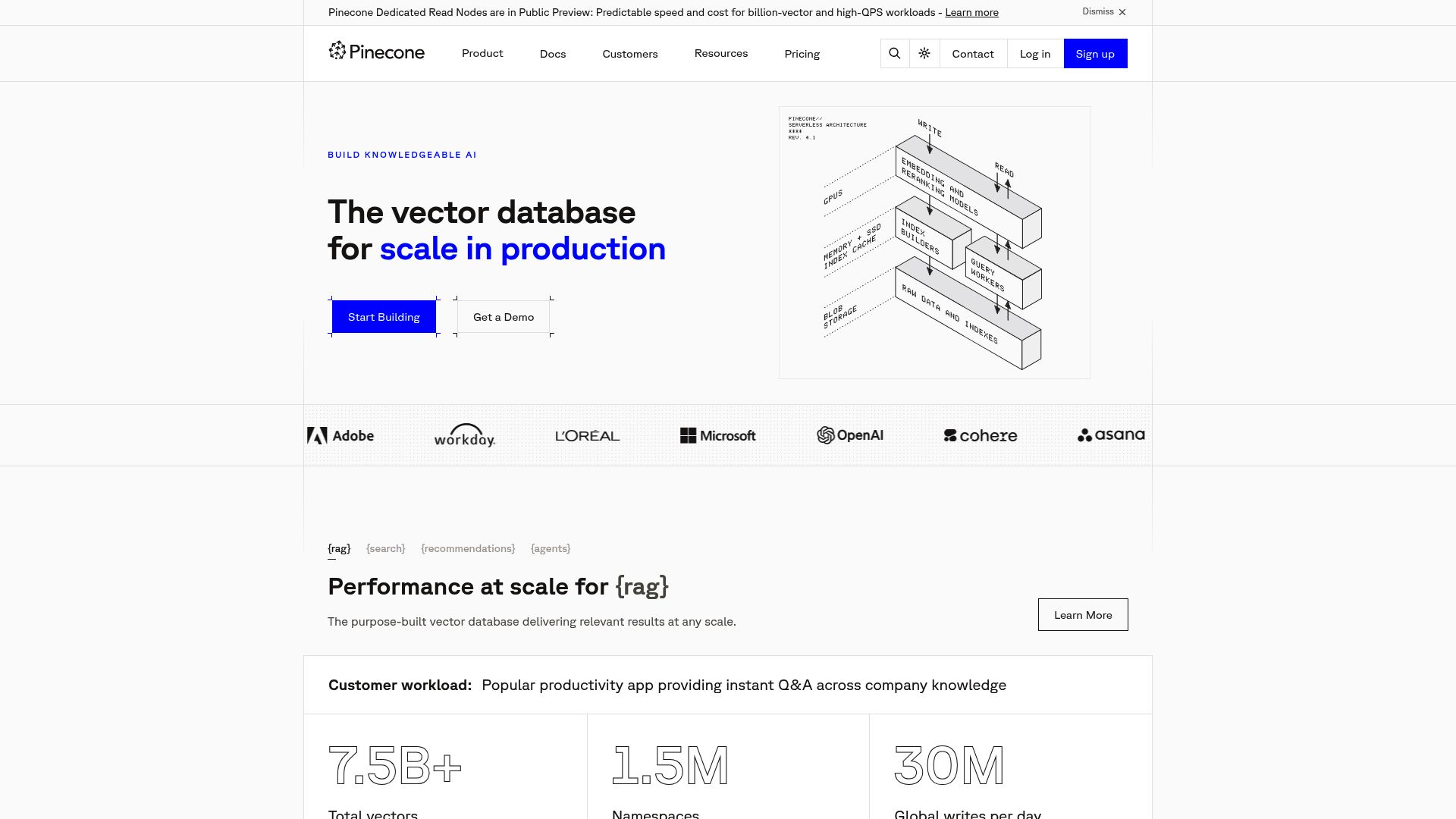
We call these "vector embeddings." Think of it as translating English into a math language that captures meaning. An embedding model converts text chunks into numerical representations in a vector space. You can learn more about this process from Pinecone's deep dive.
Stage 2: Indexing and Storage
Once your data is turned into numbers, it gets stored in a special place called a vector database.
This isn't like a normal Excel sheet. It organizes data by conceptual similarity. "Dog" is stored closer to "Cat" than to "Car." As noted by Nvidia, this allows the system to update knowledge continuously without touching the core AI brain.
Stage 3: The Retrieval
Here is where the magic happens. A user asks a question. "How does RobotSpeed improve SEO rankings?"
The system doesn't just guess. It converts that question into numbers (vectors) and scans the vector database. It looks for the information that matches the concept of the question.
It pulls the most relevant paragraphs instantly.
Stage 4: Generation
Finally, the system combines the user's question with the facts it just found.
It sends a prompt to the AI that looks something like this: "Using these facts I just found, answer the user's question." The LLM then generates a smooth, human-like answer based on real data found via retrieval-augmented generation.
Why Businesses Are Rushing to RAG
Look, the tech is cool, but does it make money?
Yes.
For businesses investing in content marketing, accuracy is currency. If you publish AI content that claims a competitor's feature is yours, you get sued.
If you publish fake stats, you lose trust.
Eliminating Hallucinations
The biggest benefit is reliability.
RAG grounds the AI. Usually, AI models hallucinate because they are trying to be helpful but lack facts.
RAG gives them the facts.
This significantly reduces the rate of wrong answers.
Cost Efficiency
Training an AI model can cost hundreds of thousands of dollars. Setting up a RAG workflow?
significantly less.
You avoid the heavy computational costs of retraining. If your product specs change tomorrow, you just upload the new spec sheet to the vector database.
Done. The AI knows it immediately.
This efficiency is why services like our AI Content Agent can offer such high value at accessible price points.
Retrieval-Augmented Generation for AI-Generated Content: A Survey of SEO Implications
When we look at retrieval-augmented generation for ai-generated content: a survey of the SEO industry suggests a massive shift.
Search engines are getting smarter. They hate generic, fluffy content.
Google wants "Helpful Content." It wants authority.
RAG allows you to produce content that references specific, real-time data.
It is not just "writing." It is "researching and writing."

Musemind UX Agency / Unsplash
How AI Article Generation Works with RAG
Standard how AI article generation works is usually linear: prompt -> text.
With RAG, it is circular: Prompt -> Search -> Verify -> Text.
This means your automated blog posts can include:
- Latest statistics from yesterday.
- Specific quotes from your CEO.
- Accurate comparisons with competitors.
This is exactly how RobotSpeed operates. We don't just ask the AI to write.
We ask it to research first. This approach delivers results up to 40x faster than manual SEO while maintaining the factual depth manual writers provide.
Real-World Use Cases for International Business
You might be thinking, "This sounds technical. How do I use it?"
1. Automated Expert Content
If you run a financial site, you can't be wrong about interest rates. You can connect your RAG system to a live feed of central bank rates. When you generate an article, the AI pulls the rate from today, not last year.
2. Internal Knowledge Bots
Imagine an HR bot that actually knows your 2024 holiday policy.
Employees ask questions, and the RAG system retrieves the specific PDF clause to answer them. It saves HR teams hours every week.
3. Customer Support
Customers want answers now. RAG allows chatbots to read your technical manuals instantly.
They can troubleshoot complex issues by "reading" the manual milliseconds before answering.
Challenges and Considerations
We have to be honest. It's not all magic buttons.
There are trade-offs.
Implementing a full RAG system yourself requires infrastructure. You need a vector database, an embedding model, and an LLM. For many mid-sized businesses, building this from scratch is too heavy.
Latency Issues
Because the system has to "go to the library" before answering, it can take a split second longer than a standard AI.
However, SuperAnnotate points out that for most business applications, this slight delay is worth the massive gain in accuracy.
Data Preparation
Garbage in, garbage out. If your source documents are messy, conflicting, or outdated, the AI will retrieve bad info.
Maintaining a clean database is key.
How RobotSpeed Bridges the Gap
This is where we come in. We understand that you want the benefits of retrieval-augmented generation for ai-generated content: a survey of our clients shows they don't want the technical headache of building it.
RobotSpeed automates this high-level workflow for SEO.
Our AI Content Agent ($99 CHF/month) handles the research.
It scans sources. It verifies facts. Then it writes.
You get the power of RAG, high authority, verified content, without needing to hire a data engineer.
Plus, we combine this content creation with our Premium Link Network.
Great content needs great backlinks to rank.
We automate that too.
The Future of Retrieval-Augmented Generation
The field is moving fast.
We are starting to see "Multi-modal RAG." This means the AI won't just retrieve text. It will be able to look at charts, images, and videos in your database to answer questions.
For an eCommerce brand, this is huge. Users could ask "Show me the shirt that looks like this vibe," and the AI retrieves product images matching the concept.
Why You Should Act Now
The SEO landscape is becoming a battle of quality. Since anyone can mash a button and get ChatGPT to write a generic article, generic content is now worthless.
Value comes from insight, data, and specificity.
RAG is the technology that delivers this at scale.
Conclusion
If you are serious about scaling your business, you cannot ignore how automation is evolving.
Retrieval-augmented generation for ai-generated content: a survey of the future proves that accuracy is the new king.
You don't have to be a tech giant to use this. You just need the right tools.
Whether you are trying to rank internationally or just want to speed up your content calendar, the combination of AI and reliable data retrieval is your best path forward.
It turns content creation from a creative guess into a reliable revenue engine.
Ready to see how accurate automated content can be?
Stop guessing and start ranking.
Check out RobotSpeed's AI Content Agent today and experience the power of researched, optimized content automation.
FAQ: retrieval augmented generation for ai generated content
What is retrieval augmented generation for ai generated content?
It is a method where an AI searches an external database for accurate facts before writing content. This ensures the output is factual and up-to-date, unlike standard AI which relies only on old training memory.
How does AI article generation work with RAG?
Instead of just writing, the system first creates a "query" based on your topic. It scans trusted sources (like your own data or the web), finds relevant info, and then uses the AI to summarize that info into an article.
Is RAG better for SEO?
Yes. Google prefers content that demonstrates expertise and accuracy (E-E-A-T).
Since RAG reduces hallucinations and cites sources, the content is generally higher quality than standard AI text.
Do I need to know code to use RAG?
Not if you use tools like RobotSpeed.
While building a RAG system requires coding (Python, Vector DBs), our platform packages this technology into a user-friendly interface for content creators.