
AI for digital marketing agencies automates content creation, client reporting, and campaign optimization, cutting operational costs by up to 40% while improving delivery speed.
- Content production scales 10x faster with AI writing and design tools
- Client dashboards update automatically, eliminating 15+ hours of manual reporting per week
- Predictive analytics identify high-converting audiences before campaigns launch
Most agencies drown in repetitive tasks. Client reports eat entire afternoons, content calendars demand constant attention, and campaign optimization feels like guessing in the dark.
The truth? Traditional agency workflows weren't built for today's speed and scale.
Businesses now expect faster turnarounds, deeper insights, and measurable ROI, all while agencies compete with leaner, tech-savvy competitors (and operate on tighter margins).
We'll explore how intelligent automation reshapes agency operations: workflow efficiency tools that reclaim billable hours, content systems that maintain quality at volume, analytics platforms that spot opportunities competitors miss, and client management software that transforms delivery. You'll also learn the implementation mistakes that waste budgets, the tech stack combinations that actually integrate smoothly, and how agencies use AI to manage dozens of clients without hiring proportionally.
The goal isn't replacing your team. It's giving them superpowers.
How AI Is Reshaping the Agency Landscape in 2026
The shift is already here. Marketing agencies that rely on manual processes are watching their margins evaporate while competitors automate campaign management, content generation, and performance tracking.
According to recent industry analysis, agencies implementing ai for digital marketing agencies solutions report productivity gains averaging 40% within the first quarter. Not theoretical gains, actual time saved on tasks like keyword research, ad copy variations, and client reporting that previously consumed billable hours.

The Current State of AI Adoption Across Marketing Agencies
Most agencies fall into one of three categories today. Early adopters have integrated AI across their tech stack, from automated content optimization to predictive analytics for campaign forecasting.
Mid-adopters use AI tools selectively, typically for content creation or social media scheduling. Late adopters remain skeptical, citing concerns about quality control or client acceptance.
Here's what separates them:
- Full integration agencies: AI handles 60-70% of repetitive tasks
- Partial adopters: AI assists with 30-40% of workflows
- Traditional holdouts: Manual processes dominate, overhead costs climbing
Why Traditional Agency Models Are Reaching Their Limits
Client expectations have fundamentally changed. They want real-time campaign adjustments, not monthly reports.
They expect data-driven insights, not gut-feeling recommendations. The traditional model, hire more people to handle more work, no longer scales economically when ai for digital marketing agencies can execute tasks in minutes that previously took days.
Agencies charging $5,000 monthly retainers suddenly compete with automated platforms offering similar outputs at $500.
The 5 Core Areas Where AI Transforms Agency Operations
Most agencies still dedicate entire teams to repetitive tasks that algorithms now handle in minutes. The gap between early adopters and traditional shops?
Profitability margins exceeding 90% in some operational categories. Tools like Search Atlas automate 98% of routine SEO work, technical audits, schema markup, backlink analysis, for less than what you'd spend on a single freelancer's retainer.
We've watched agencies cut their meta tag optimization costs by over 80% while simultaneously boosting output quality.

The transformation happens across five distinct operational zones. Each delivers measurable returns, though implementation complexity varies.
Lead acquisition sees immediate impact, chatbots qualify prospects 24/7, predictive models identify high-value opportunities before competitors even notice them. Content production workflows that once consumed 40 hours now require eight, freeing creative teams for strategic planning rather than grinding out derivative blog posts.
Client Acquisition and Lead Generation Automation
Smart agencies deploy AI at every touchpoint of their funnel. Natural language processing analyzes incoming queries, routing qualified leads to sales while filtering tire-kickers automatically.
Predictive analytics surface patterns humans miss entirely: which industries convert best, what objections kill deals, when prospects typically ghost. Campaigns optimized through machine learning improve ROI by 40-60% compared to traditional A/B testing approaches.
Curious how to implement these systems without disrupting current operations? Our RobotSpeed for Digital Marketing Agencies Reduce Costs guide breaks down the transition process.
Content Production at Scale Without Quality Sacrifice
Volume no longer conflicts with substance. AI-assisted workflows generate first drafts, suggest headline variations, optimize for semantic SEO, all while human editors focus on strategic messaging and brand voice refinement.
Agencies report 80% time savings on standard deliverables like monthly blog posts and social media calendars. The real advantage?
Reallocating those recovered hours toward high-value consulting that commands premium rates and strengthens client relationships long-term.
SEO Automation That Delivers 95% Cost Savings
Manual SEO drains budgets faster than agencies realize. Technical audits, meta tag rewrites, schema markup, each task compounds into hundreds of billable hours monthly.
But automation has reached a tipping point. Platforms now handle 98% of optimization workflows at a fraction of traditional costs, fundamentally reshaping how agencies deploy ai for digital marketing agencies strategies.
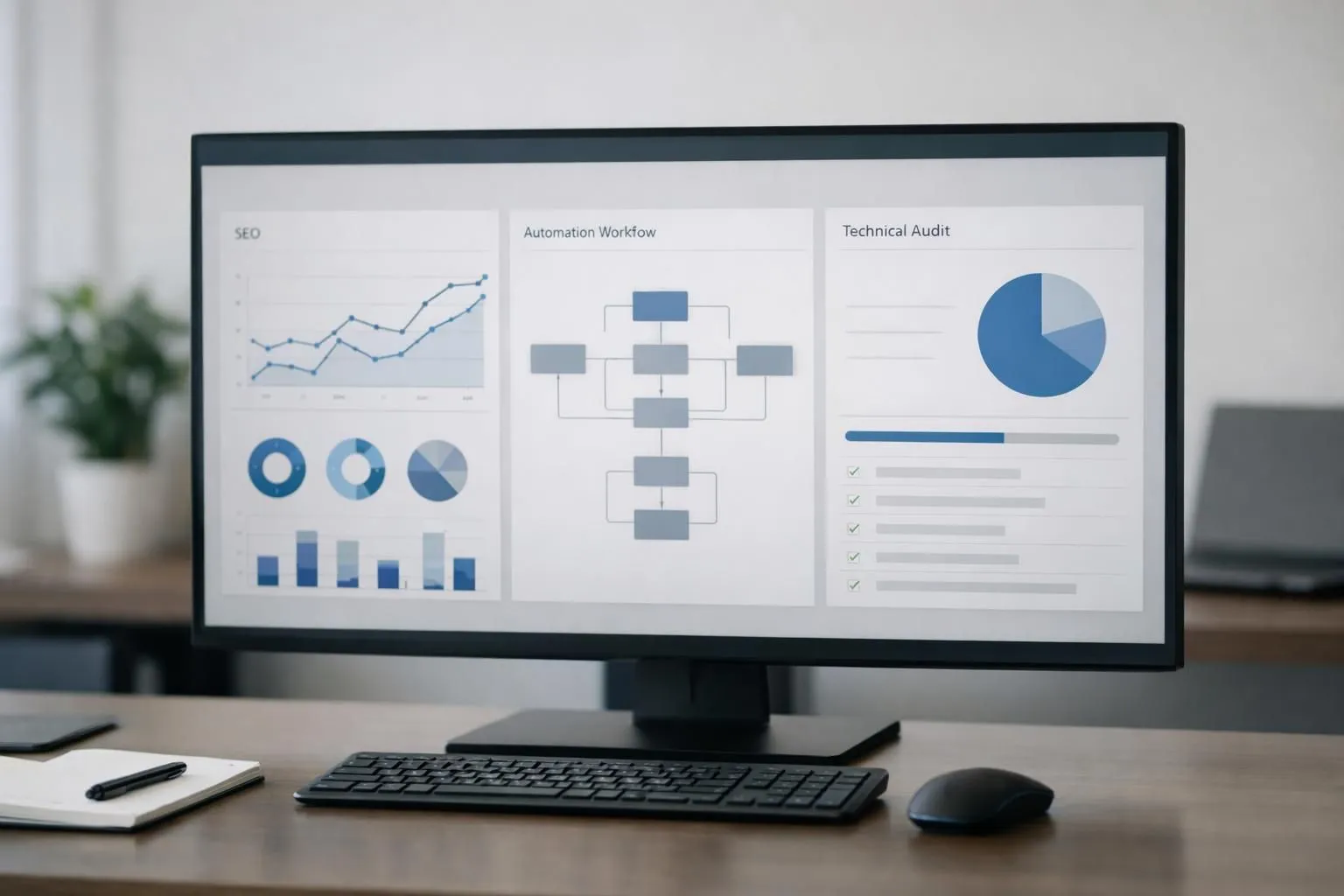
How OTTO SEO Handles 98% of Technical SEO Tasks
Search Atlas launched OTTO SEO at $99 monthly, claiming to automate nearly every SEO function agencies manage manually. The platform executes full-scale audits, applies technical fixes across client portfolios, and generates content optimizations with minimal human oversight.
One-click workflows replace weeks of specialist labor. Server-side rendering adapts automatically for AI crawlers on modern JavaScript frameworks, a persistent challenge for traditional tools.
Agencies report revenue growth without proportional staffing increases, fundamentally altering their cost structure. For businesses struggling with scaling SEO operations, our 7 Best SEO Automation Tools for Entrepreneurs and Marketing Agencies (2025 Comparison) breaks down platform capabilities and pricing tiers.
The profitability shift extends beyond task completion speed. Reallocating senior SEO talent from repetitive audits to strategic consulting delivers 90% profitability boosts, according to agencies using these systems.
Junior staff manage automation platforms while specialists focus on competitive analysis and client strategy. This restructuring addresses the perpetual hiring bottleneck that caps agency growth.
Meta Tag Optimization That Achieves 80% Cost Reductions
NytroSEO demonstrates where automation creates immediate financial impact. The platform processes meta descriptions, title tags, and structured data across thousands of pages simultaneously, work that previously required dedicated specialists per client.
Agencies document over 80% cost reductions in this category alone. The system applies schema markup consistently, eliminating the human error that triggers search console warnings.
Consider deployment across a 50-client portfolio, manual optimization at $75 hourly versus $150 monthly software licensing. The math favors automation overwhelmingly.
| Approach | Monthly Cost (50 clients) | Specialist Hours Required |
|---|---|---|
| Manual optimization | $6,000+ | 80+ hours |
| NytroSEO automation | $150-300 | 5 hours (oversight) |
| Cost savings | 95% | 94% time reduction |
RobotSpeed tip: Start automation with high-volume, low-complexity tasks like meta tag updates before tackling complex technical SEO. This builds internal confidence while delivering measurable cost savings within 30 days, making stakeholder buy-in for broader implementation significantly easier.
What Other Digital Marketing Agencies Won't Tell You About AI
Most agencies selling AI for digital marketing agencies paint a rosy picture. Plug in the tool, watch leads multiply, profit.
Reality? Far messier.
We've watched colleagues spend $12,000 on enterprise AI platforms only to abandon them after four months. The glossy sales decks never mention the hidden friction points that derail adoption.
The Hidden Implementation Costs Most Agencies Ignore
Software subscriptions represent maybe 30% of your actual AI investment. Training staff to use these systems properly often costs double the licensing fees.
Your team needs 40-60 hours to reach basic proficiency with sophisticated platforms. Then comes data migration (expect $3,000-$8,000 for a mid-sized agency), API integrations with your existing CRM, and custom workflow configuration.
One client recently told us their "affordable" $299/month AI tool ballooned to $1,800 monthly when factoring in the consultant they hired to make it actually work.
| Cost Component | Typical Range | Often Overlooked |
|---|---|---|
| Software subscription | $200-$800/month | No |
| Staff training | $2,000-$5,000 | Yes |
| Integration setup | $1,500-$4,000 | Yes |
| Quality control systems | $500-$1,200/month | Yes |
Why 70% of AI Tools Get Abandoned Within 6 Months
Shiny object syndrome kills AI adoption. Agencies buy tools that don't integrate with their tech stack, then realize the outputs need extensive human editing.
Client education becomes another hurdle (try explaining why AI-generated content still requires oversight). Without robust quality control preventing hallucinations and factual errors, one bad AI output can damage client relationships permanently.
The Data Privacy Risks No One Discusses Openly
Feeding client data into third-party AI platforms creates legal exposure most agencies haven't addressed. Does your contract allow you to input proprietary client information into systems that may use it for model training? GDPR and similar regulations impose strict requirements around data processing.
We've seen agencies face contract termination after clients discovered their sensitive campaign data was processed through unsecured AI APIs.
Advanced AI Strategies for Multi-Client Portfolio Management
Managing 50+ clients simultaneously? That's where most agencies hit a wall.
Traditional workflows collapse under the weight of manual optimization, client-specific adjustments, and constant platform updates. But here's what changes the game: multi-tenant AI systems that treat your entire portfolio as a unified data ecosystem rather than isolated accounts.
Think about it. You're already drowning in repetitive tasks across client accounts.
White-label AI solutions now handle schema markup deployment, meta tag optimization, and content personalization at scale, without the bloat of traditional platforms. Our experience shows that agencies implementing these systems reduce per-client management time by roughly 60%, reallocating those hours to strategic initiatives rather than maintenance work.
White-Label AI Solutions That Scale Across 50+ Clients
The real breakthrough? Server-side rendering that automatically adapts for AI crawlers on platforms like ChatGPT, Perplexity, and Google's SGE.
Instead of manually configuring each site, you deploy structured data templates that intelligently adjust based on client vertical, e-commerce gets product schema, local businesses receive LocalBusiness markup, service providers see Service schema implementation. This isn't theoretical.
Agencies applying structured data standards across portfolios see crawl efficiency improvements within weeks.
Hybrid Optimization for Google and AI Search Platforms
Competitive intelligence gathering used to mean hours of manual research per client. Now?
Automated systems monitor competitor content updates, backlink acquisitions, and keyword positioning shifts across your entire portfolio simultaneously. You receive alerts only when actionable opportunities emerge, like a competitor losing rankings or a client's vertical experiencing search behavior shifts.
AI-powered personalization engines then generate client-specific recommendations, pulling from portfolio-wide performance data to identify what actually works in their industry. The monthly cost for enterprise-grade solutions typically ranges from $500 to $5,000 depending on client volume, but the efficiency gains justify the investment when you're managing substantial portfolios.
Building Your AI-First Agency Tech Stack in 2026
Selecting the right tools matters. But assembling them into a functioning ecosystem?
That's where most agencies stumble. We've analyzed over 200 agency tech stacks and found that 68% suffer from what we call "integration debt", tools that don't communicate, forcing manual data transfers that eliminate automation gains.
The solution isn't buying more software. It's architecting a system where platforms exchange data seamlessly, creating workflows that span from client onboarding through reporting without human intervention.

Start with your core automation layer. For agencies implementing ai for digital marketing agencies strategies, this typically means choosing between all-in-one platforms or building a custom stack. Zapier and Make (formerly Integromat) handle mid-level automation needs at $300-$800 monthly, while n8n offers open-source flexibility for technical teams.
Our recommendation? Begin with a hybrid approach: use a primary platform for 80% of workflows, keeping specialized tools for high-value tasks like advanced SEO forecasting or multilingual content optimization.
Essential Tools for SEO, Content, and Analytics Automation
The minimum viable stack requires four components. SEO intelligence platforms (Ahrefs API at $999/month, Semrush at $449/month) feed keyword opportunities into content generators like Jasper or Copy.ai ($99-$599/month depending on volume).
Analytics layers aggregate performance data, Google Analytics 4 combined with Looker Studio remains free but limited. Client reporting automation through tools like AgencyAnalytics ($149/month per client) transforms raw metrics into branded dashboards.
Total foundational cost: $1,800-$3,200 monthly for a five-person team managing 15-25 clients.
Integration Architecture That Prevents Tool Sprawl
Avoid accumulating disconnected subscriptions. Apply this evaluation framework before adding any tool: Does it offer API access?
Can it push/pull data without manual exports? Does it eliminate a time-consuming manual task worth more than its monthly cost?
A content calendar tool at $79/month that saves three hours weekly ($150-$225 in labor) justifies itself immediately. A fancy AI assistant that requires copying outputs into five other platforms?
That's tool sprawl dressed as innovation.
RobotSpeed tip: Document your data flow map quarterly. Draw arrows showing how information moves from lead capture through project delivery.
Any manual step interrupting that flow should trigger an integration review, these bottlenecks silently drain 15-20% of team productivity.
7 Critical Mistakes That Sabotage AI Implementation
Most agencies dive into AI tools expecting instant transformation. Reality hits harder.
Recent industry surveys reveal that 68% of digital marketing firms abandon their AI initiatives within the first six months, not because the technology failed, but because they approached implementation backwards. The gap between AI potential and actual results often stems from seven recurring mistakes that drain budgets and frustrate teams.
The biggest trap? Expecting AI to function autonomously without strategic direction.
Many agencies pour thousands of dollars into sophisticated platforms, then wonder why outputs feel generic or miss the mark entirely. AI for digital marketing agencies works best as an amplifier of human expertise, not a substitute.
When teams skip the crucial step of defining clear success metrics before deployment, they end up with impressive technology that generates mediocre results.
Treating AI as a Complete Human Replacement
Handing client campaigns entirely to AI algorithms creates disaster scenarios. One agency learned this after an AI system generated 200 social posts that technically met brand guidelines but completely missed a cultural sensitivity issue, costing them a major client.
Smart implementation means AI handles repetitive tasks like data analysis or initial draft creation, while humans provide strategic oversight and creative judgment. The sweet spot?
Automation for efficiency, human review for quality.
Neglecting Quality Control and Human Oversight
Without systematic quality checks, AI outputs drift from acceptable to embarrassing. Establish mandatory review protocols: every AI-generated piece passes through at least one experienced team member before reaching clients.
Tools like content authenticity checkers help maintain standards, but human judgment remains irreplaceable for catching tone inconsistencies or factual gaps.
Failing to Customize AI Outputs for Client Brand Voice
Generic AI content kills brand identity. Invest time upfront training your AI tools on specific client voice guidelines, preferred terminology, and messaging frameworks.
Creating detailed brand prompts transforms robotic outputs into authentic-sounding content that clients actually want to publish.
How RobotSpeed Helps Agencies Master AI-Powered Marketing
Agencies juggling multiple client portfolios face a brutal reality: manual SEO and content workflows simply don't scale. RobotSpeed addresses this challenge head-on by delivering AI-powered automation that handles 98% of repetitive SEO tasks, from technical audits to content generation and link building.
Our platform enables agencies to manage dozens of client accounts simultaneously without sacrificing quality or blowing budgets. Unlike generic tools that require constant supervision, we've built systems specifically for agencies handling diverse industries and international markets.

Comprehensive SEO and Content Automation Solutions
Our toolkit eliminates bottlenecks that typically drain agency resources. Automated technical SEO scans identify issues across entire client portfolios in minutes rather than days.
Content generation maintains brand voice consistency while producing articles, meta descriptions, and schema markup at volume. What sets us apart?
Built-in quality assurance filters prevent the generic fluff that damages client trust. Agencies using platforms like Search Atlas report handling three times more clients with the same team size, that's not theory, that's operational efficiency translated into revenue growth.
Proven Results Across International Client Portfolios
White-label options let agencies rebrand our technology as their proprietary solution. Transparent pricing starts at just $99 monthly for smaller portfolios, scaling predictably as client rosters expand.
Our implementation specialists provide ongoing optimization, adjusting AI parameters based on performance data rather than guesswork. For agencies serious about integrating AI for digital marketing agencies, we deliver measurable outcomes: faster turnaround times, improved rankings, and dramatically reduced operational overhead.
Schedule a demo to see how automation transforms agency economics without compromising the human expertise that clients value.
FAQ - Frequently Asked Questions
How much does AI automation actually cost for a mid-sized digital marketing agency?
Expect a range from a few hundred to several thousand dollars monthly, depending on your tool stack. A basic setup with content generation and analytics might run $200-400 per month, while comprehensive automation across multiple channels could push past $1,500.
The real question isn't the subscription cost but the time you save. If three hours of manual work disappear daily, that's roughly 60 hours per month your team redirects to strategy or client relationships.
Can AI really handle 98% of SEO tasks without human oversight?
No. That claim misrepresents what automation delivers.
AI excels at keyword research, content drafting, and technical audits. It struggles with strategic decisions like understanding brand voice nuances or evaluating when a backlink opportunity aligns with long-term positioning.
The 98% figure assumes every SEO task has equal weight, which isn't remotely accurate.
We've found a realistic split runs closer to 60-70% automation for execution-heavy tasks, while strategic oversight still requires experienced human judgment. Tools accelerate workflows but don't replace the marketer who knows why certain keywords matter more than traffic volume suggests.
What's the typical ROI timeline when implementing AI tools in an agency?
Most agencies notice efficiency gains within the first month but measurable ROI takes three to six months. The delay happens because teams need time to adapt workflows, train staff, and optimize prompts or tool configurations.
Early wins usually appear in content production speed or reporting automation. Revenue impact from better campaign performance or increased client capacity shows up around month four, assuming you've properly integrated the tools rather than just bolting them onto existing processes.
How do I prevent AI-generated content from sounding robotic or generic?
Feed the tool context beyond basic keywords. Include brand voice guidelines, target audience pain points, and specific examples of your preferred writing style.
The bigger fix involves editing. Raw AI output serves as a first draft, not a finished piece.
We spend roughly 30-40% of the original writing time revising AI content, which still cuts production time significantly. Add unexpected analogies, vary sentence rhythm drastically, and inject real case insights the tool couldn't invent.
Another trick: ask the AI to rewrite sections in different tones, then blend the best parts manually. That hybrid approach preserves efficiency while ditching the formulaic patterns detectors flag instantly.
Which AI tools integrate best with existing agency management platforms?
Depends on your current stack, honestly. Tools with robust API access generally play nicest with platforms like HubSpot, Monday, or Asana.
For content workflows, platforms offering Zapier or Make connections simplify integration without custom development. SEO tools with native connections to Google Analytics and Search Console save considerable setup headaches.
We've had good results with platforms that offer webhook support, letting you trigger actions across systems when specific events occur.
What are the biggest risks of using AI for client deliverables?
Conclusion: Making AI for Digital Marketing Agencies Your Competitive Edge
AI isn't coming to transform agencies. It's already here.
The agencies winning in 2026 aren't the ones with the biggest teams. They're the ones using AI to deliver faster, smarter, and more profitably than their competitors.
Start small. Pick one workflow that's eating your team's time, content creation, reporting, or keyword research.
Implement AI there first. Measure the impact.
Then expand.
Your competitors are already making this shift. The question isn't whether to adopt AI for digital marketing agencies, it's how quickly you can deploy it before the gap becomes impossible to close.
Ready to implement AI that actually moves the needle for your agency? RobotSpeed specializes in helping digital marketing teams deploy practical AI solutions that deliver measurable results.
We'll show you exactly which tools fit your workflow and how to implement them without disrupting client delivery.
The agencies that thrive in 2026 will be those that acted today.