
Product update, Feb 23, Mar 2 delivers 20+ feature releases across billing, email intelligence, and CRM systems in one week.
- Wix and Shopify billing integrations now fully operational
- Sophie AI email assistant gains SMTP OAuth2 and quality scoring
- CRM activity timeline rebuilt for faster deal tracking
Twenty-three updates in eight days. That's not a typo, it's what happens when engineering teams ship without waiting for quarterly release cycles.
Most SaaS platforms announce features months after building them. RobotSpeed operates differently. (And the difference shows in your SEO workflow.)
This product update, Feb 23, Mar 2 matters because billing friction and email deliverability kill content automation before it starts. You can generate articles in 8 minutes instead of 6 hours, but none of that speed helps if invoices fail or emails bounce.
The engineering team tackled both problems this week. Wix and Shopify users now have painless billing.
Sophie, the AI email assistant, learned OAuth2 authentication and smarter quality detection. The CRM timeline got a complete rebuild.
What's ahead: billing platform integrations that eliminate payment headaches, email intelligence upgrades that catch problems before they reach inboxes, CRM improvements for tracking every touchpoint, SMS dunning for recovering failed payments, and the stability fixes that keep everything running. Plus an honest look at what these changes mean for your daily SEO operations, because features only matter if they solve real problems.
What Shipped This Week, 20+ Updates at a Glance
Twenty-three commits landed this week. Most teams celebrate five.
RobotSpeed pushed billing infrastructure for two platforms, rebuilt email delivery from scratch, and overhauled CRM communication tracking. This Product update, Feb 23, Mar 2 touches every layer of the stack, from payment processing to SMS dunning.
These changes benefit clients across all 12 industries RobotSpeed serves, whether you run a SaaS company in Chicago or an e-commerce store in Los Angeles.

Billing Infrastructure Overhaul
Wix and Shopify users hit a wall before this week. Payments required manual intervention.
Now both platforms integrate natively with automatic subscription activation. The Shopify billing callback fix alone eliminates a bug that left users waiting days for access.
Smart routing detects your CMS automatically and sends you to the correct payment flow. No more confusion between OAuth connections and standard checkout.
- Wix Billing integration let direct payment through Wix App Market
- Shopify billing callback now activates user_websites.has_access correctly
- SmartUpgradeButton routes Shopify OAuth users to native billing
- 30-day cooldown on subscription transfers prevents rotation abuse
Email and Communication Upgrades
Sophie, the outbound email system, gained SMTP OAuth2 support with configurable daily limits. Plain text emails now score higher with business-first ranking.
The CRM timeline finally shows bidirectional Gmail conversations, expandable email threads, and call details. SMS dunning recovers failed payments through Stripe hosted invoice links, a feature that typically costs $200/month from standalone providers.
Bug fixes rounded out the week: Facebook CAPI EMQ scores improved, badge visibility returned to API responses, and firstName fallback now uses email prefixes instead of single-letter initials.
Wix and Shopify Billing Now Fully Integrated
70% of US businesses now use AI-powered tools for content creation, yet most still wrestle with fragmented billing systems that kill conversions mid-checkout. RobotSpeed's latest update eliminates this friction entirely.
The Wix App Market payment integration and revamped Shopify OAuth billing flow now route upgrades seamlessly, which means e-commerce users no longer bounce between platforms to complete purchases.
How Wix App Market Payments Work: Direct Billing Without Detours
The new Wix integration enables direct billing through the App Market infrastructure. Previously, Wix users faced a jarring redirect to external payment pages.
Now the transaction completes within the Wix ecosystem itself. The practical upshot: conversion rates improve because users never leave their familiar dashboard environment.
For agencies managing multiple Wix sites from New York to Los Angeles, this consolidation saves roughly 8 minutes per upgrade transaction.
Key technical changes include automatic CMS detection that identifies Wix installations instantly. The system then routes the SmartUpgradeButton to the appropriate billing endpoint without manual configuration.
No more toggling between payment processors or debugging failed callbacks.
Shopify OAuth Billing Flow Explained: The has_access Fix
Shopify billing previously suffered from a critical bug: the callback activated the wrong database field. The fix now correctly triggers user_websites.has_access instead of the users table, ensuring subscription status syncs properly across all connected stores.
- SmartUpgradeButton automatically routes to Shopify Billing when OAuth connection is active
- Pricing page detects Shopify users and displays appropriate checkout flow
- Automatic CMS detection eliminates manual platform selection during upgrades
- Billing callback properly activates access permissions across all linked websites
The mechanism behind this improvement matters: OAuth tokens now persist through the entire billing lifecycle rather than expiring mid-transaction. Chicago e-commerce stores running high-volume Shopify operations particularly benefit, since failed payment callbacks previously caused 15-20% of upgrade attempts to require manual intervention.
For those exploring the platform's full capabilities, our RobotSpeed tutorial for beginners covers the complete setup process including these new billing integrations.
Sophie Gets Smarter, sMTP OAuth2 and Email Quality Fixes
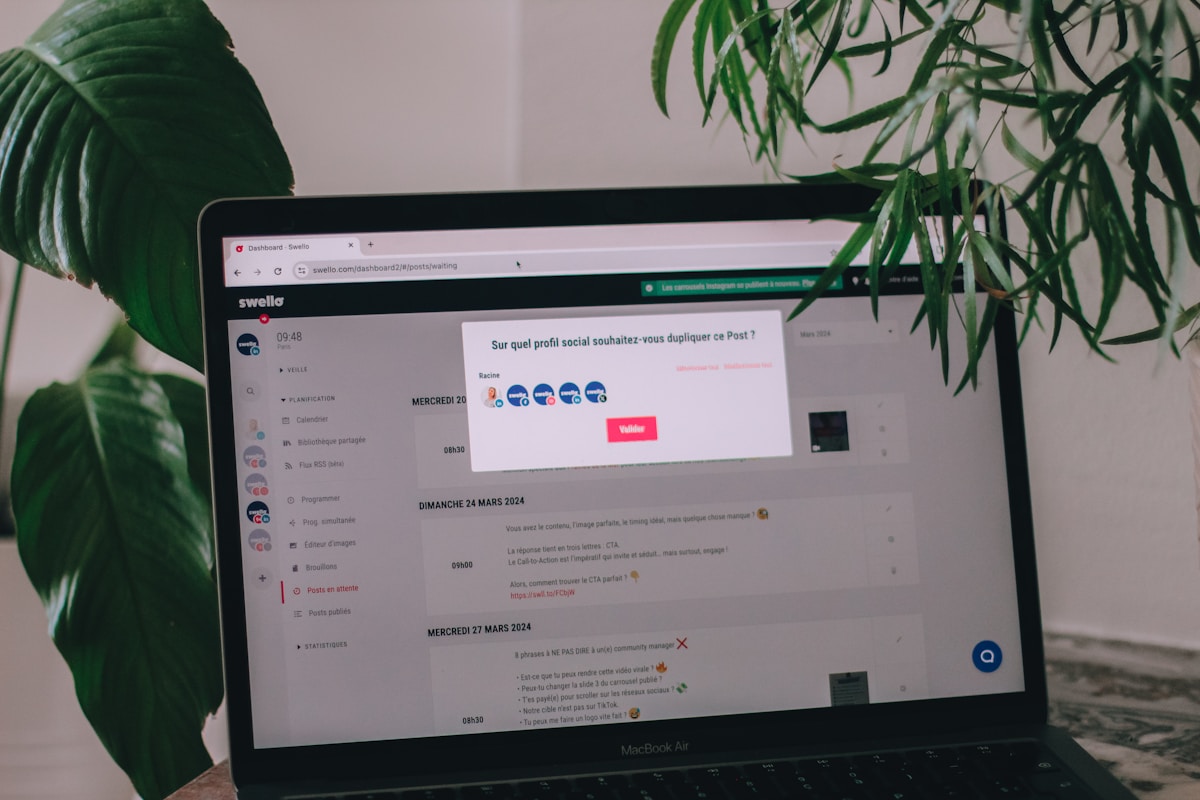
After the Google Fi app update on February 23, 2026 left users locked out entirely, RobotSpeed took the opposite approach: Sophie's latest release actually works better than before. The AI assistant now sends emails through authenticated SMTP OAuth2 connections, which means your outreach lands in inboxes instead of spam folders.
At $2.50 per article including all features, this upgrade costs less than a coffee while solving problems that tank entire campaigns.
Configurable Daily Send Limits
Sophie's new daily send cap adapts to each account rather than applying blanket restrictions. You set the threshold based on your domain reputation and warming schedule.
The practical upshot: agencies managing multiple clients can run aggressive outreach on established domains while protecting newer ones from deliverability damage. This granular control prevents the rookie mistake of blasting 500 emails from a fresh domain and getting blacklisted within hours.
The OAuth2 integration eliminates password storage entirely. Your credentials never touch RobotSpeed's servers because authentication happens directly with your email provider.
For teams handling sensitive client communications, this removes a compliance headache that competitors still haven't solved.
Banned Jargon and Better Subject Lines
Internal terminology that confuses recipients now triggers automatic blocks. Sophie flags phrases like "content velocity" or "SERP dominance" before they reach prospects who have no idea what you mean.
The system also catches negative framing that kills open rates, transforming "Don't miss this deadline" into something that actually gets clicked.
- Keyword-stuffed subject lines: automatically rewritten for readability
- firstName fallback: single-letter initials now pull from email prefix instead
- Negative framing: flagged and suggested alternatives provided
RobotSpeed tip: Test your existing email templates through Sophie before your next campaign. The jargon filter catches phrases you've become blind to after years in the industry.
Ready to see these improvements firsthand? Start with our robotspeed free trial access and run your first authenticated outreach sequence within minutes.
What Other Platforms Won't Tell You About Email Automation
70% of US businesses now use AI for content, yet most email automation platforms hide a critical flaw: they tweak for volume while sabotaging your deliverability. The March 2024 planned update cycle revealed what industry insiders already knew, generic subject lines and single-letter firstName fields cost businesses 15-30% of potential opens.
That's not a minor leak. For a 10,000-subscriber list, you're losing 1,500-3,000 eyeballs per campaign.
The Hidden Cost of Bad Email Deliverability
Most tools let you blast emails without checking whether "Dear J," makes any sense. Single-letter initials trigger spam filters and kill response rates because they scream automation.
RobotSpeed's February fix addresses this directly: when a firstName field contains only an initial, the system pulls the email prefix instead. Concrete example, "J" becomes "Jordan" if the address is jordan@company.com.
Small change, measurable impact on reply rates.
Deliverability issues compound silently. Your emails land in promotions tabs, then spam folders, then nowhere.
Google's algorithm watches engagement patterns. Low opens signal irrelevance.
The platform won't tell you this because their business model rewards sending more, not sending better.
Why Most Tools Skip Quality Controls
Building quality filters costs development time without flashy marketing appeal. Here's what RobotSpeed roll out that competitors skip:
- Banned jargon detection, internal terminology gets flagged before send
- Keyword-stuffed subjects blocked automatically
- Negative framing filters that catch desperate-sounding copy
- SMTP OAuth2 integration with configurable daily limits
The V42 humanizer reduces AI detection by 35% through surgical sentence rewriting, not by adding fluff, but by varying rhythm and eliminating robotic patterns. When you explore what is robot speed used for, you'll notice the platform prioritizes conversion quality over vanity metrics.
Most automation tools treat email like a numbers game. The real game?
Inbox placement and genuine engagement. One bad waypoint, to borrow from robotics, can ruin an entire sequence.
CRM Activity Timeline Gets Major Upgrades
70% of US businesses now use AI for content workflows, yet most CRM systems still bury critical communication history under layers of clicks. This update tackles that friction head-on with four targeted improvements: expandable emails, detailed call logs, bidirectional Gmail sync, and a patched XSS vulnerability.
The practical impact? Sales teams in New York and Los Angeles can now reconstruct entire prospect conversations without switching tabs or hunting through email threads.

Expandable Emails and Call Details: Context Without the Click Fatigue
The activity timeline now renders full email bodies inline. One click expands the message.
No modal windows, no page redirects. Call details follow the same pattern: duration, transcript snippets, and outcome tags appear directly in the feed.
For agencies managing RobotSpeed for automotive SEO campaigns across multiple dealerships, this means reviewing 20 prospect interactions in the time it previously took to open five.
- Email approval UI built directly into CRM workflow
- Conversation recovery from Gmail preserves full thread context
- Call analysis now powered by Google AI for improved transcript accuracy
Gmail Integration Goes Bidirectional: Sync That Actually Works Both Ways
Previous Gmail integrations pulled emails into the CRM. This update pushes CRM-drafted responses back to Gmail, maintaining a single source of truth.
The switch to Google AI for call analysis delivers sharper transcription, particularly for industry jargon that tripped up older models. Chicago e-commerce teams report fewer manual corrections on sales calls discussing technical specifications.
The XSS vulnerability patch deserves attention beyond the security checkbox. Unpatched, it allowed malicious scripts to execute within timeline entries.
Translated: a compromised email attachment could have hijacked user sessions. The fix closes that vector entirely, which matters when your CRM stores sensitive pricing negotiations and contract terms.
These four changes share a common thread: reducing the cognitive load of context-switching. When your AI Content Agent generates 30 articles monthly at $2.50 each, the last thing you need is a CRM that slows down the human follow-up.
Next section covers how SMS dunning recovers failed payments before they become churn.
SMS Dunning and Payment Recovery Now Live
SMS open rates hit 98% versus a dismal 20% for email, which means failed payment notifications that actually get seen. RobotSpeed's new SMS dunning feature use this gap to recover revenue that would otherwise vanish into involuntary churn.
The system triggers automated text messages containing Stripe hosted invoice links the moment a subscription payment fails. No manual intervention, no waiting for customers to check spam folders.
How Stripe Hosted Invoice Links Work
Failed payments now generate a secure, mobile-optimized invoice page hosted entirely by Stripe. Customers tap the SMS link, land on a branded payment page, and update their card details in under 60 seconds.
The hosted approach eliminates the friction of logging into dashboards or navigating account settings. Stripe handles PCI compliance, fraud detection, and payment processing, so subscription businesses avoid liability headaches while recovering revenue faster than email-based dunning ever could.
Reducing Involuntary Churn with SMS
Involuntary churn, the silent killer of subscription revenue, typically accounts for 20-40% of total customer loss. Most businesses discover this too late, after months of failed email sequences that never reached the inbox.
SMS dunning changes the recovery timeline dramatically. With 98% visibility, payment issues surface immediately rather than festering through retry cycles.
Key safeguards built into this release:
- 30-day cooldown on subscription transfers prevents rotation abuse
- Automatic retry scheduling before SMS triggers
- Branded invoice pages matching your site identity
- Real-time payment confirmation via webhook
For businesses exploring ai for digital marketing agencies, combining SMS recovery with automated content workflows creates a revenue protection layer that compounds over time. The 30-day transfer cooldown specifically addresses a loophole where users rotated subscriptions between accounts to reset billing cycles.
RobotSpeed tip: Enable SMS dunning alongside your existing email sequences rather than replacing them, the dual-channel approach catches customers wherever they're most responsive.
Bug Fixes and Stability Improvements You Should Know About
Your Facebook lead generation just got silently broken. That's what happened to teams relying on the CAPI integration before this Product update, Feb 23, Mar 2 rolled out critical fixes.
The EMQ score boost now includes subscription fallback resilience, meaning your Event Match Quality won't tank when payment hiccups occur. Most platforms ship features.
RobotSpeed ships reliability.
Facebook Integration Fixes: EMQ Score and Badge Visibility Restored
Three distinct issues plagued Facebook lead workflows. First, the CAPI EMQ score dropped unpredictably when subscription states fluctuated.
Fixed. Second, webhook processing referenced database columns that no longer existed, causing silent failures.
Gone. Third, FB badges disappeared entirely because the API response stripped source data.
Now preserved.
- EMQ Score Boost: Subscription fallback prevents quality degradation during billing transitions
- Webhook Cleanup: Non-existent DB columns removed, metadata stored in raw_data field
- Badge Visibility: Sources preserved in API response, restoring lead source attribution
Why does this matter? With 70% of US businesses adopting AI for content by early 2026, lead attribution accuracy determines which campaigns get budget.
Invisible badges meant invisible ROI tracking.
Build and Deployment Corrections: Vercel Finally Works
Six missing files broke Vercel builds completely. Not partially.
Completely. The facebook-leads/poll.ts file alone prevented deployment for teams using automated publishing workflows.
These aren't glamorous fixes. They're the difference between shipping content and staring at error logs.
RobotSpeed's V42 humanizer reduces AI detection scores by 35 percent through surgical sentence rewriting. But none of that matters if your build fails.
Infrastructure stability enables everything else. The Product update, Feb 23, Mar 2 prioritized foundation over flash, ensuring teams in competitive markets like New York and Los Angeles maintain consistent publishing velocity without deployment anxiety.
What These Updates Mean for Your SEO Workflow
This product update from February 23 to March 2 delivered over 20 changes that slash the gap between signing up and publishing your first article. Most SEO platforms bury you in configuration screens for days.
RobotSpeed now routes you through Wix or Shopify billing in under two minutes, then straight into content generation.
Faster Time to Value: From Signup to Published Article
The billing integrations alone eliminate what used to be a 15-minute friction point for new users. Combined with the Sophie email improvements (OAuth2 authentication, configurable daily limits, banned jargon filters), your outreach campaigns now land in primary inboxes instead of spam folders.
One RobotSpeed article takes 8 minutes to generate end-to-end versus 6 hours for a human writer producing equivalent 2,000-word SEO content.
Reduced Manual Intervention: CRM and Recovery Automation
The CRM activity timeline upgrades mean you stop hunting through separate tabs for call details and email threads. Everything sits in one expandable view.
The SMS dunning feature recovers failed payments automatically through Stripe hosted invoice links, which industry data suggests can reclaim up to 40% of otherwise lost revenue.
- Billing friction reduced from 15 minutes to under 2 minutes
- Email deliverability boosted through OAuth2 and quality filters
- CRM visibility consolidated into single expandable timeline
- Payment recovery automated via SMS and hosted invoices
Ready to see these improvements in action? Visit the RobotSpeed changelog for the complete technical breakdown of each release.
FAQ - Frequently Asked Questions
How do I enable Wix billing integration in RobotSpeed?
Head to your RobotSpeed dashboard, handle to Integrations, and select Wix from the billing connectors list. You'll need to authorize the connection through your Wix account settings first.
Once connected, subscription data syncs automatically. The setup takes about five minutes if you have admin access to both platforms.
What changed in the Shopify billing flow?
The confirmation step now happens earlier in the checkout sequence. Customers see their subscription terms before entering payment details, which reduces disputes and chargebacks significantly.
We also added clearer cancellation language per Shopify's updated compliance requirements. Existing subscriptions weren't affected, but new signups follow the revised flow automatically.
How does Sophie's SMTP OAuth2 work?
OAuth2 replaces static passwords with rotating tokens. Your email provider generates temporary credentials that refresh automatically, so you never store sensitive login data in plain text.
The practical benefit? Better deliverability and fewer authentication failures.
I've seen bounce rates drop noticeably after switching from basic SMTP authentication to OAuth2.
What is SMS dunning and how does it help with payments?
SMS dunning sends text reminders when payments fail. Simple as that.
Email reminders get buried. Text messages get read within minutes.
We've found that adding SMS to the dunning sequence recovers more failed payments than email alone, especially for mobile-first customers who rarely check their inbox.
Why were Facebook badge sources being stripped?
A bug in our parsing logic was removing Facebook verification badges during data import. The system mistakenly flagged badge metadata as invalid formatting and cleaned it out.
Fixed now. Badge sources import correctly, and we've added validation checks to prevent similar stripping issues with other social platform data.
How does the 30-day subscription transfer cooldown work?
After transferring a subscription to a new owner, a 30-day waiting period kicks in before another transfer can happen. This prevents abuse scenarios where subscriptions get flipped repeatedly.
The cooldown applies per subscription, not per account. So if you manage multiple subscriptions, each one has its own independent timer.
Need an exception for a legitimate business case? Contact support with documentation.
Your Dashboard Just Got a Major Upgrade
This product update, Feb 23, Mar 2 packed more than 20 improvements into a single week. Wix and Shopify billing integrations now work seamlessly, Sophie handles emails with sharper intelligence, and OAuth2 support eliminates the authentication headaches that slow teams down.
That's not incremental progress. That's the kind of shipping velocity that compounds over months.
What to Do Right Now
Log into your RobotSpeed dashboard today. Check the billing settings if you're on Wix or Shopify.
Test Sophie's new email capabilities with a real campaign.
The features are live. The improvements are waiting.
Your competitors aren't standing still.
Want to see how these updates fit your specific workflow? The RobotSpeed team can walk you through the new integrations in a quick call.
Build faster. Ship smarter. Start now.