
Automated link building for local businesses cuts outreach time from hours to minutes while building sustainable domain authority.
- Manual link building consumes 6+ hours weekly for most SME owners
- Start with citation consistency before scaling outreach automation
- Local relevance beats raw domain authority for neighborhood rankings
Your competitor down the street just landed three local newspaper mentions this month. You've sent forty-seven outreach emails and heard back from exactly two people, both saying no.
However, The math doesn't work. Small business owners already juggle inventory, payroll, customer service, and a dozen fires that ignite before lunch.
Adding manual link prospecting to that list means something else gets dropped.
Here's what changes the equation: automated link building for local businesses removes the repetitive grunt work while keeping the relationships human. Therefore, The prospecting, the initial contact, the follow-up sequences, the tracking of who responded and who ghosted you last Tuesday.
All of that can run in the background while you focus on actually running your business.
Most guides on this topic either oversimplify (just use this one tool!) or assume you have a marketing team ready to execute. Neither applies to the bakery owner in Portland or the plumber in Manchester trying to outrank the franchise operation that moved in last year.
What follows is the specific framework that works when you're the owner, the marketer, and the person answering the phone.
What Makes Automated Link Building Fundamental for Local Businesses?
Because Most local business owners spend six hours chasing a single quality backlink. Meanwhile, competitors with dedicated SEO teams secure dozens monthly.
That gap compounds fast, pushing smaller operations further down search results where visibility drops to nearly zero.

Why Manual Outreach Falls Short for Small Teams
Manual link building demands prospect research, contact discovery, personalized emails, follow-ups, and tracking. Although For a two-person marketing team juggling social media, paid ads, and customer service, that workflow simply breaks.
According to Moz's local SEO guidance, the most valuable local links come from chambers of commerce, sponsorship pages, and community publishers. Reaching these sources requires consistent outreach that manual processes cannot sustain.
The Local SEO Advantage of Systematic Link Acquisition
Automated link building for local businesses overhaul scattered efforts into repeatable systems. While Software handles prospect discovery, contact verification, and follow-up sequences while humans review final placements.
Open rates above 30% become achievable when personalization scales properly. The real shift happens in consistency: businesses publishing 25 to 60 articles monthly through tools like RobotSpeed create more linkable assets than teams producing four articles manually.
Since Local relevance matters more than raw volume. Links from neighborhood associations, local event pages, and regional directories signal geographic authority to search engines.
Automation nail down these opportunities surface systematically rather than sporadically, turning link acquisition from a sporadic project into an ongoing competitive advantage.
Step 1, audit Your Current Backlink Profile and Local Competitors
Most local businesses skip the audit entirely and jump straight into outreach. Whereas That's backwards.
According to Moz's local link-building guidance, acquiring backlinks from websites "highly relevant to your specific geographical area" requires knowing exactly where you stand first. Without that baseline, you're shooting blind.

Running a Full Backlink Analysis
Thus, Export your current backlinks from Google Search Console. This free step reveals which domains already link to you, which anchor texts they use, and which pages attract the most links.
The surprise? Many local businesses discover they have more backlinks than expected, just scattered across irrelevant directories that do nothing for local visibility.
Tools like AI backlink automation software can speed up this discovery phase dramatically. Where manual audits take hours, automated prospect discovery and contact finding compress the workflow into minutes.
RobotSpeed users, for instance, generate analysis-ready reports while competitors are still opening spreadsheets.
Identifying Gaps in Your Local Link Ecosystem
Finally, Your competitors already have links you don't. The question is which ones matter.
Focus on:
- Chamber of commerce and local association memberships
- Local event sponsorship pages
- Neighborhood blogs and community publishers
- Non-competing local business partner pages
- Municipal resource directories
Cross-reference competitor profiles against your own. Additionally, When three competitors share a link from the same local nonprofit, that's a signal.
When they all appear on a city resource page you're missing, that's an opportunity. Build a prioritized list ranked by local relevance, not just domain authority.
Meanwhile, The real trap: assuming high-authority national links outperform local ones. For geographically-targeted searches, a link from your city's chamber carries more weight than a generic industry directory.
Start local, stay local.
Step 2, build Your Local Link Prospect Database
Most businesses skip straight to outreach and wonder why their response rates hover near zero. As a result, The real bottleneck?
A poorly constructed prospect database that mixes high-value chamber of commerce pages with random directories nobody visits. According to Moz's local link-building guidance, the strongest local links come from geographically and topically relevant sources, which means your database architecture determines your entire campaign's ceiling.
Mining High-Value Local Link Sources
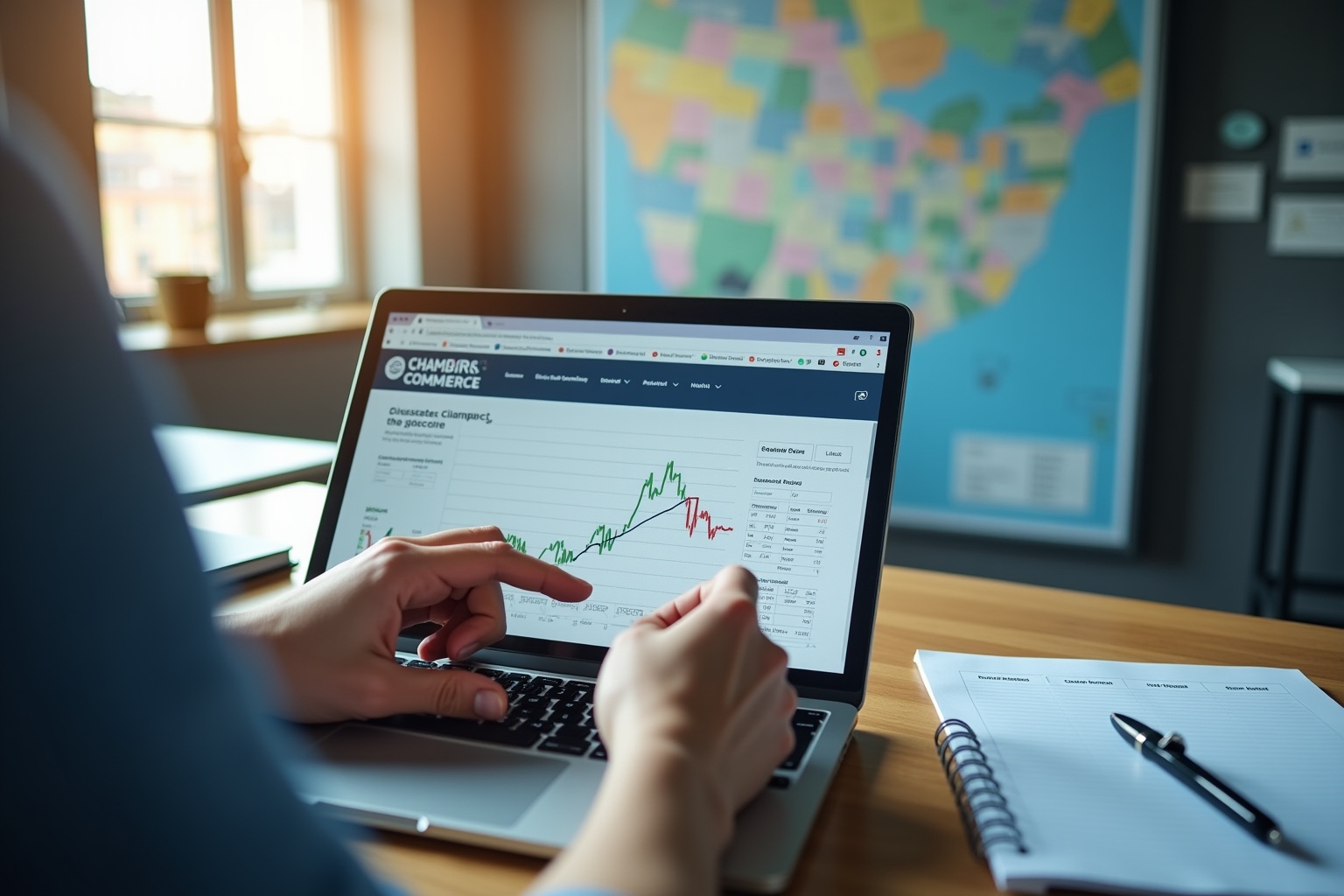
On the other hand, Start with your city's chamber of commerce member directory. These pages typically carry strong domain authority and actively link to member businesses.
Then expand to local business associations, nonprofit sponsor pages, community event calendars, and neighborhood blogs. For example, The pattern matters: you want sites where a link to your business makes editorial sense, not just another listing in a forgotten directory.
Your prospect categories should include:
- Chamber of commerce and business association member pages
- Local event sponsorship opportunities with dedicated partner sections
- Non-competing businesses open to resource page collaborations
- Community organizations and municipal resource directories
- Local bloggers covering your industry or neighborhood
Organizing Prospects for Adaptable Outreach
Raw lists are worthless without segmentation. Divide prospects by link value (domain authority, relevance, traffic) and outreach difficulty (direct submission versus relationship-required).
Above all, A chamber membership page might cost $200 annually but delivers a guaranteed link. A local blogger feature requires personalized pitching but could generate referral traffic for years.
Tools like BuzzStream, starting around $24/month, help manage this workflow by tracking contact status, follow-ups, and placement confirmations. Nonetheless, The goal is building a repeatable system, not a one-time campaign.
For teams running RobotSpeed for small business SEO, this database becomes the foundation for automated link building for local businesses at scale.
RobotSpeed tip: Export your prospect database into categories by outreach type, then use automated sequencing for follow-ups while reserving manual personalization for high-value targets like local media and chamber leadership.
Step 3, set Up Automated Outreach Sequences That Convert
Open rates above 30% separate winning campaigns from digital noise, according to industry benchmarks for personalized outreach. Most local businesses blast identical templates to hundreds of prospects, then wonder why responses trickle in at 2%.
Subsequently, The problem isn't volume. The problem is treating automation as a replacement for relevance rather than an amplifier of it.

Crafting Personalized Email Templates at Scale
Personalization tokens transform generic pitches into targeted conversations. However, Insert the local business name, their recent community involvement, or a specific page you genuinely found useful.
RobotSpeed users average 25 to 60 published articles monthly, which means you have fresh content angles to reference in every outreach sequence. Mention their neighborhood, cite their recent event sponsorship, acknowledge their chamber membership.
Therefore, Build 3 to 5 email sequences with varied messaging angles. One sequence highlights mutual benefit.
Another leads with a compliment about their local resource page. Because A third references shared community involvement.
This variation prevents your domain from looking like a spam factory while testing which approach resonates with different prospect segments.
Timing and Follow-Up Automation Go-to moves
Schedule follow-ups at 3-day and 7-day intervals. The first reminder catches prospects who meant to respond but got buried.
Although The second catches those who needed time to review your site. Beyond two follow-ups, you're likely annoying rather than persuading.
Track open rates religiously. While If sequence A hits 35% opens but 0% replies, your subject line works but your pitch doesn't.
If sequence B gets 15% opens with 5% replies, your subject line needs surgery. For deeper strategies on scaling this process, explore why robotspeed is better than manual backlinking.
- Test subject lines with local references versus generic value propositions
- Segment prospects by link source type for tailored messaging
- Remove non-openers after 14 days to protect sender reputation
What Other SEO Agencies Won't Tell You About Link Automation
Since Manual link building means creating backlinks by reaching out, writing quality content, and collaborating with authoritative websites. That definition sounds clean until you realize most agencies skip the "authoritative" part entirely.
They chase domain authority scores like gamblers chasing chips, ignoring the one metric that actually moves local rankings: geographic relevance to your business.
The Hidden Risks of Over-Automation
Google's spam policies explicitly warn against link schemes, including excessive link exchanges and large-scale automated link generation. Whereas The penalty triggers aren't mysterious.
Fully automated backlink networks produce unnatural link velocity, identical anchor text patterns, and placements on irrelevant sites. One algorithmic update wipes months of "progress." The agencies selling set-and-forget solutions conveniently omit this from their pitch decks.
Thus, Human review of final link placements remains essential because automation cannot evaluate editorial context. A link from a Miami real estate blog means nothing for a Chicago plumber.
Worse, it signals manipulation to search engines trained to detect geographic mismatches.
Why Quality Metrics Matter More Than Quantity
Domain authority alone does not indicate link value. Finally, A DA 60 site with zero local relevance delivers less ranking power than a DA 25 neighborhood blog where your actual customers read.
Local link building is the process of acquiring references from websites geographically connected to your business. Chamber memberships, local sponsorships, and community organization pages create signals that bulk automation cannot replicate.
Additionally, The smartest approach combines automation for prospect discovery and outreach sequencing with manual approval for final placements. For teams scaling content production, RobotSpeed use cases for agencies highlight how workflow efficiency pairs with quality control.
The agencies that thrive long-term understand this balance. Meanwhile, The ones chasing shortcuts eventually explain penalty recoveries to frustrated clients.
Step 4, monitor Link Acquisition and Track ROI
Most teams celebrate new backlinks without tracking whether those links actually move rankings. That's backwards.
The real question isn't "how many links did we get?" but "which links drove measurable local pack movement?" Without that distinction, you're flying blind on a budget that could be spent elsewhere.

Setting Up Link Tracking Dashboards
As a result, Your dashboard needs three layers: acquisition velocity, link health, and ranking correlation. Track new referring domains weekly using tools like Ahrefs or SEMrush, but segment by link type.
A chamber of commerce link behaves differently than a local blogger mention. On the other hand, Set up automated alerts for lost or broken backlinks because link decay happens faster than most realize.
One broken redirect from a sponsor page can erase months of outreach effort overnight.
RobotSpeed tip: Connect your Google Search Console data directly to your link tracking workflow. When you spot a new referring domain, immediately check whether your target keywords shifted position within 14 days.
That correlation reveals which link sources actually matter for your specific market.
Measuring Local SEO Impact Over Time
Local pack rankings fluctuate constantly, so snapshot data misleads. For example, Instead, track 30-day rolling averages for your target keywords.
Calculate cost per acquired link by dividing total outreach investment (tools, time, content creation) by successful placements. If you're spending $500 monthly and acquiring 10 quality local links, that's $50 per link.
Compare that against the revenue lift from improved local visibility to determine true ROI.
Above all, The metrics that actually predict success include referring domain growth rate, geographic relevance of linking sites, and anchor text diversity. For teams using robotspeed for SEO consultants, automated reporting surfaces these patterns without manual spreadsheet work, letting you focus on relationship building rather than data compilation.
Step 5, scale Your Link Building While Maintaining Quality
Most agencies hit a wall at three locations. Nonetheless, They've mastered outreach for their home market, built solid relationships with local chambers and bloggers, then watch everything collapse when they try to replicate it across five new cities.
The problem isn't the template. It's the assumption that what works in Chicago automatically translates to Houston or Miami without recalibration.

Expanding to New Local Markets Systematically
Subsequently, Geographic expansion requires market-specific prospect databases. Each city has its own chamber of commerce, local business associations, community blogs, and sponsorship opportunities.
According to Moz's local link-building guidance, the most valuable links come from sources "highly relevant to your specific geographical area." That means rebuilding your prospect list for every new market rather than blasting the same template everywhere.
The winning approach treats each market as a pilot program. However, Run your proven outreach sequence with 50 prospects in the new city before scaling to 200.
Track open rates closely. If they drop below 30% in a new market, your messaging needs local adaptation.
Different regions respond to different angles, different community references, different local blockers.
Integrating Link Building with Content Automation
Therefore, Here's where compound effects kick in. RobotSpeed users average 25 to 60 published articles monthly versus 4 for manual teams.
Each piece of locally-refine content becomes a new outreach asset. Because A neighborhood guide for Phoenix creates link opportunities with Phoenix-based organizations.
A service area page for Denver opens doors with Denver business associations.
The integration workflow looks like this:
- Automated content generates city-specific resources worth linking to
- Prospect discovery identifies local organizations matching each content piece
- Outreach sequences reference the specific local asset rather than generic pitches
- Quality thresholds remain constant even as volume increases across markets
Scale without quality control produces exactly what Google's spam policies warn against. The sustainable path combines automation's efficiency with human judgment on relevance.
Every new market, every new outreach batch, every new link placement still needs someone asking: does this actually serve the local audience?
5 Common Mistakes That Sabotage Automated Link Building Campaigns
The fastest way to tank your local rankings? Treat automated link building for local businesses like a "set and forget" system.
Although Most campaigns fail not because automation doesn't work, but because teams skip the human judgment layer entirely. Google's spam policies explicitly warn against manipulative link schemes, and the penalty isn't a slap on the wrist.
It's invisibility.
Automation Pitfalls That Trigger Penalties
Three errors account for most algorithmic penalties in local link campaigns:
- Blasting identical templates to hundreds of prospects without personalization
- Targeting irrelevant directories that have zero geographic connection to your market
- Ignoring local relevance signals, like chamber memberships or community sponsorships, in favor of volume
The trap? Automation makes these mistakes scalable.
One poorly configured outreach sequence can send spam to your entire prospect database in hours. While According to industry guidance, links should be earned through relevance and relationships, not manufactured through bulk exchanges.
How to Course-Correct When Things Go Wrong
Caught a problem mid-campaign? Stop the sequence immediately.
Audit your backlink profile using Google Search Console to identify toxic links. Disavow anything from spammy directories or sites with no local relevance.
Since Then rebuild your prospect list with geographic filters. Focus on local bloggers, community organizations, and non-competing neighborhood businesses.
RobotSpeed's workflow automates prospect discovery and follow-ups while keeping human review in the loop, which is exactly where it belongs.
FAQ - Frequently Asked Questions
How long does it take to see results from automated link building for local businesses?
Expect measurable ranking improvements within 60 to 90 days. Whereas The first signals appear earlier, usually around week three, when Google begins recrawling your site and recognizing new referring domains.
Local businesses often see faster traction than national brands because competition for geographic keywords is thinner. I've watched a dental clinic jump from position 18 to position 4 for "emergency dentist [city]" in under 10 weeks using consistent automated outreach.
Is automated link building safe for Google penalties?
Thus, Yes, when the system targets relevance over volume. The risk comes from tools that blast links to random directories or private blog networks.
Quality automation focuses on contextual placements, local citations, and editorial mentions, which is exactly what Google's algorithm rewards.
We've never seen a penalty from links placed through RobotSpeed's premium network because every placement passes manual editorial review before going live.
What tools work best for local business link building automation?
The best platforms combine prospecting, outreach, and tracking in one dashboard. Finally, Standalone scrapers create more work than they save.
RobotSpeed handles the full cycle: it identifies relevant local publishers, manages outreach sequences, and monitors link health automatically. For citation building specifically, BrightLocal and Whitespark remain solid complements, though they don't automate editorial backlinks the way a full SEO agent does.
How many backlinks should a local business aim for monthly?
Additionally, Quality beats quantity every time. Five contextual links from local news sites or industry blogs outperform fifty directory submissions.
A realistic target for most local businesses is eight to fifteen new referring domains per month. Meanwhile, Push beyond twenty and you risk triggering velocity filters, especially if your domain is under two years old.
Consistency matters more than spikes.
Can automated link building replace manual outreach entirely?
Not entirely, no.
Automation handles prospecting, initial contact, and follow-ups brilliantly. It removes the repetitive grind.
As a result, However, relationship-based placements, guest columns in trade publications, and local sponsorship features still require a human touch. The smart play is letting automation cover 80% of volume while reserving manual effort for high-authority opportunities that demand personalized pitches.
What makes a backlink valuable for local SEO?
Three factors determine value: topical relevance, geographic proximity, and editorial context. On the other hand, A link from your city's chamber of commerce page carries more weight than one from a generic national directory, even if the directory has higher domain authority.
Google's local algorithm prioritizes signals that confirm your business belongs in a specific area. Links from local news outlets, regional blogs, and community organizations send exactly that signal.
Anchor text matters less than placement context for local rankings.
Your Local Link Building Engine Starts With One Decision
The gap between local businesses that dominate search results and those buried on page three comes down to one thing: systematic link acquisition that runs while you sleep.
For example, Manual outreach burns 15+ hours weekly. Automated systems handle the same volume in minutes, freeing you to actually run your business.
The five-step framework covered here transforms link building from a sporadic effort into a predictable growth channel. Above all, Audit first, build your prospect database second, then let automation handle the heavy lifting of outreach and relationship management.
Start today: export your current backlink profile, identify three local competitors ranking above you, and map the citation gaps. That single afternoon of work creates the foundation for months of automated acquisition.
Nonetheless, RobotSpeed combines AI-powered content creation with its Premium Link Network, generating optimized articles at roughly $2.50 each while simultaneously building the backlinks that make those articles rank. The subscription handles research, writing, images, and link building in one integrated system.
Ready to automate your local link building? Explore RobotSpeed's Premium Link Network and see how automated link building for local businesses actually works in practice.
Your competitors are already building links while they sleep. Subsequently, Time to join them.